
How to Build AI Products That Work for Your Customers and Your P&L
When you think of the impact of AI on product, it’s easy to focus on everything this technology makes possible, like faster prototyping, synthesis, or coding output. But as product people, we need to understand that AI products don’t work the same way typical SaaS products do economically. Getting more customers doesn’t necessarily mean you’ll make your company more money, but it’s very likely that it will lead to spending more.

Hayder Schneider was one of the speakers who—along with Simonetta Batteiger and Jan Werner—addressed what AI is changing about our work. In his keynote, Hayder argued the importance of commercial acumen for product people, shared what makes AI costs structurally different, and outlined how to build products that deliver value customers are willing to pay for.
Read on for the highlights, or watch Hayden’s full keynote below.
With SaaS products, the economics tend to be pretty simple. Get more customers and you make more money for your company.
But AI product economics work in a completely different way, as illustrated by this cringe-worthy tweet.
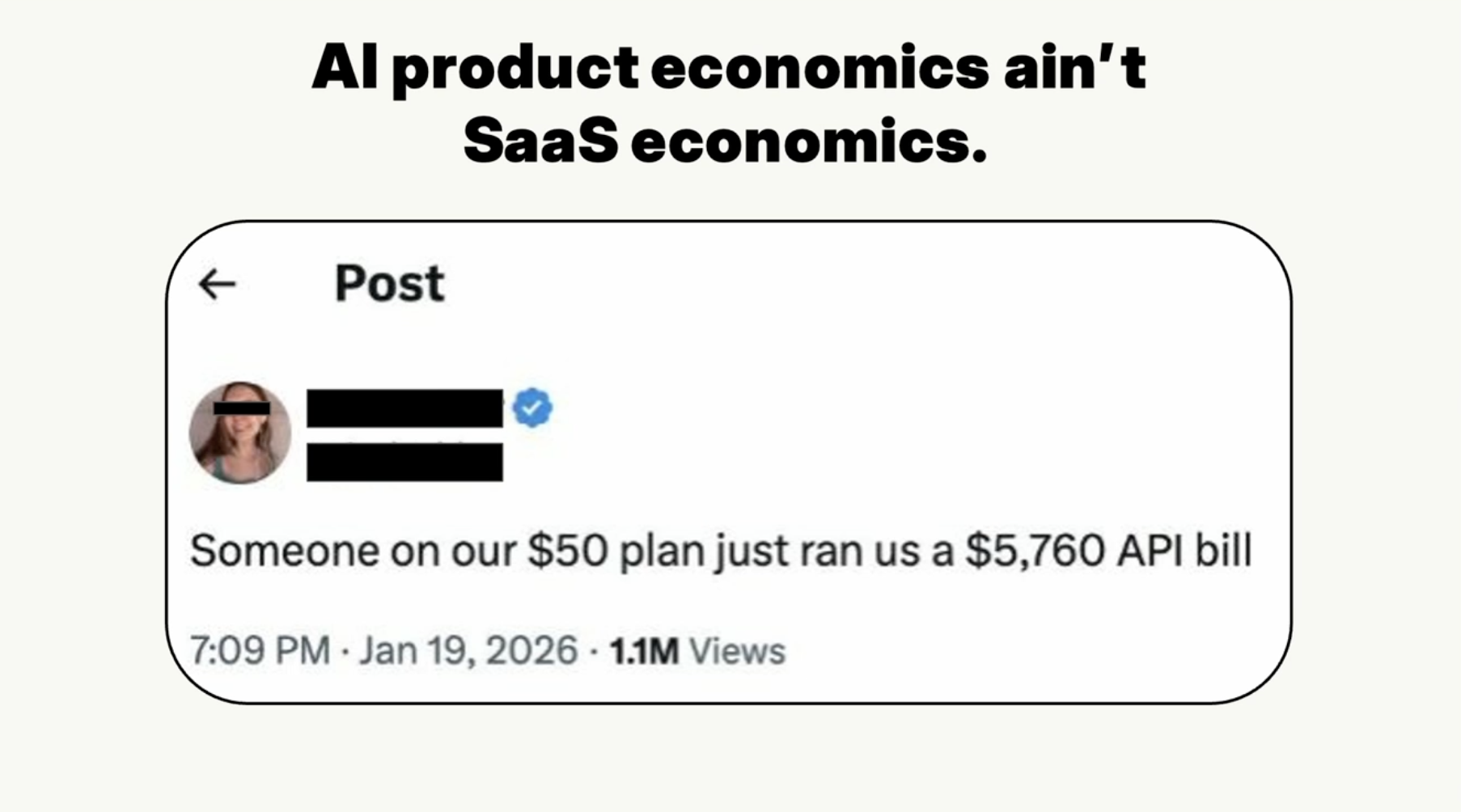
Hayder began his keynote by asking a question we should all care about: What makes AI economics different from SaaS economics?
The main difference is that AI has both revenue potential and a cost-to-serve, and each has a different impact on your company’s gross margin (the actual amount of money you end up making).
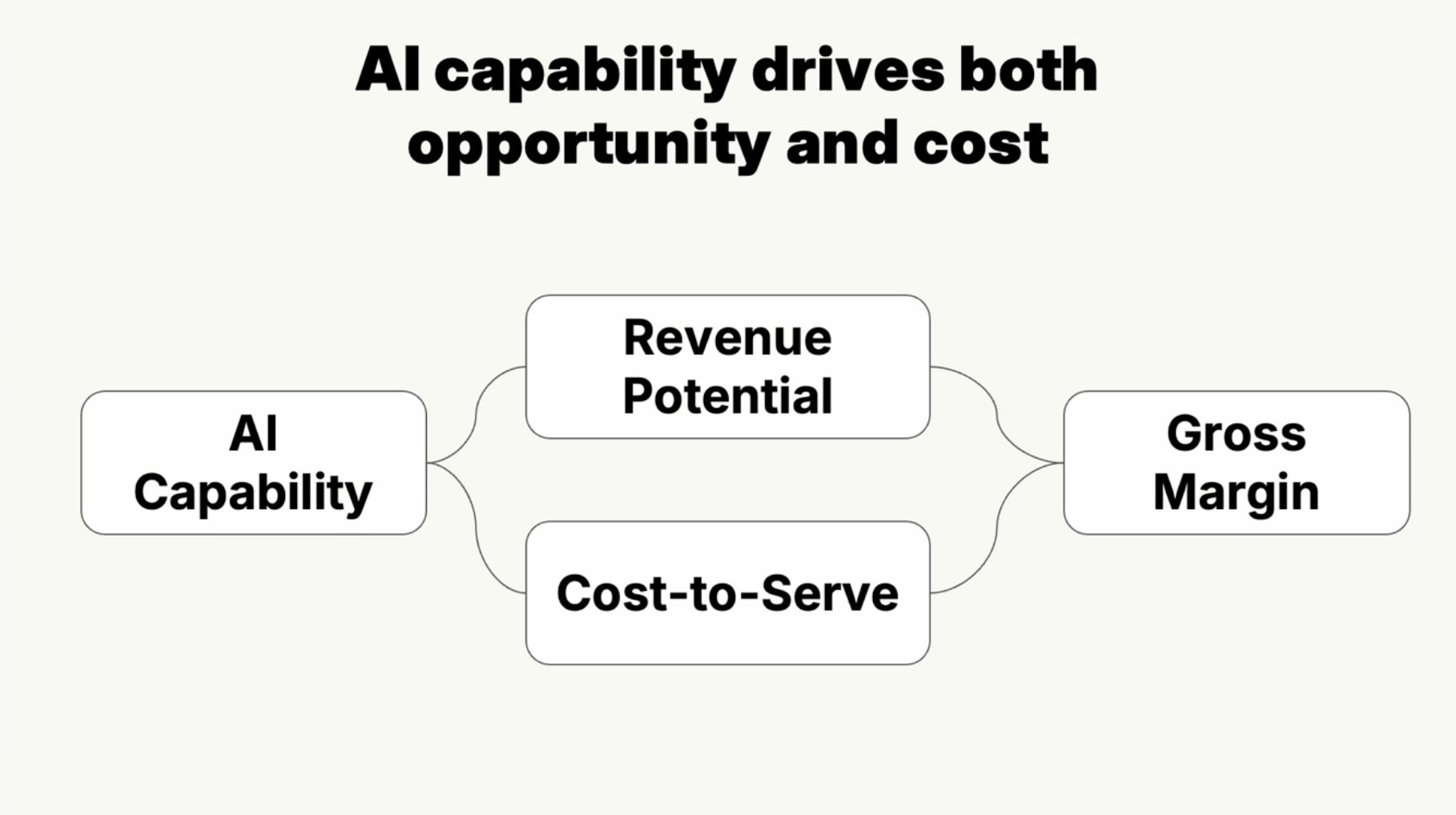
6 drivers of both value and cost-to-serve
To consider this concept more closely, Hayder outlined six drivers that can impact both value potential and cost-to-serve. These are:
Model: Different models like reasoning, standard, open, and closed can do different things for your product and customers.
Modality: Each modality such as text, audio, images, or video enables a different value proposition and comes at a different cost.
Context: Because you pay for input and output tokens, the amount of context you provide can vary in cost and the value it offers.
Agents: It’s very exciting to see what’s possible with a team of agents and sub-agents, but again, agents can quickly drive up costs.
Inference: The choice between self-hosted vs. rented also affects value and associated costs.
Infrastructure: Elements like RAG, caching, and evals can help you achieve a specific value proposition, but again, come with costs.
Why we can’t just assume the cost will work itself out
You may be thinking that these aren’t really things you need to worry about—the cost will eventually work itself out. But, Hayder cautioned, we can’t just assume that’s the case.
First, he shared an anecdote from Nick Turley, the head of ChatGPT at OpenAI, who appeared on Lenny’s podcast. Nick explained that OpenAI set the $20 price point and then observed that a lot of people in the industry were copying it. Now he wonders if they unintentionally erased a bunch of market cap by setting the price point where they did.
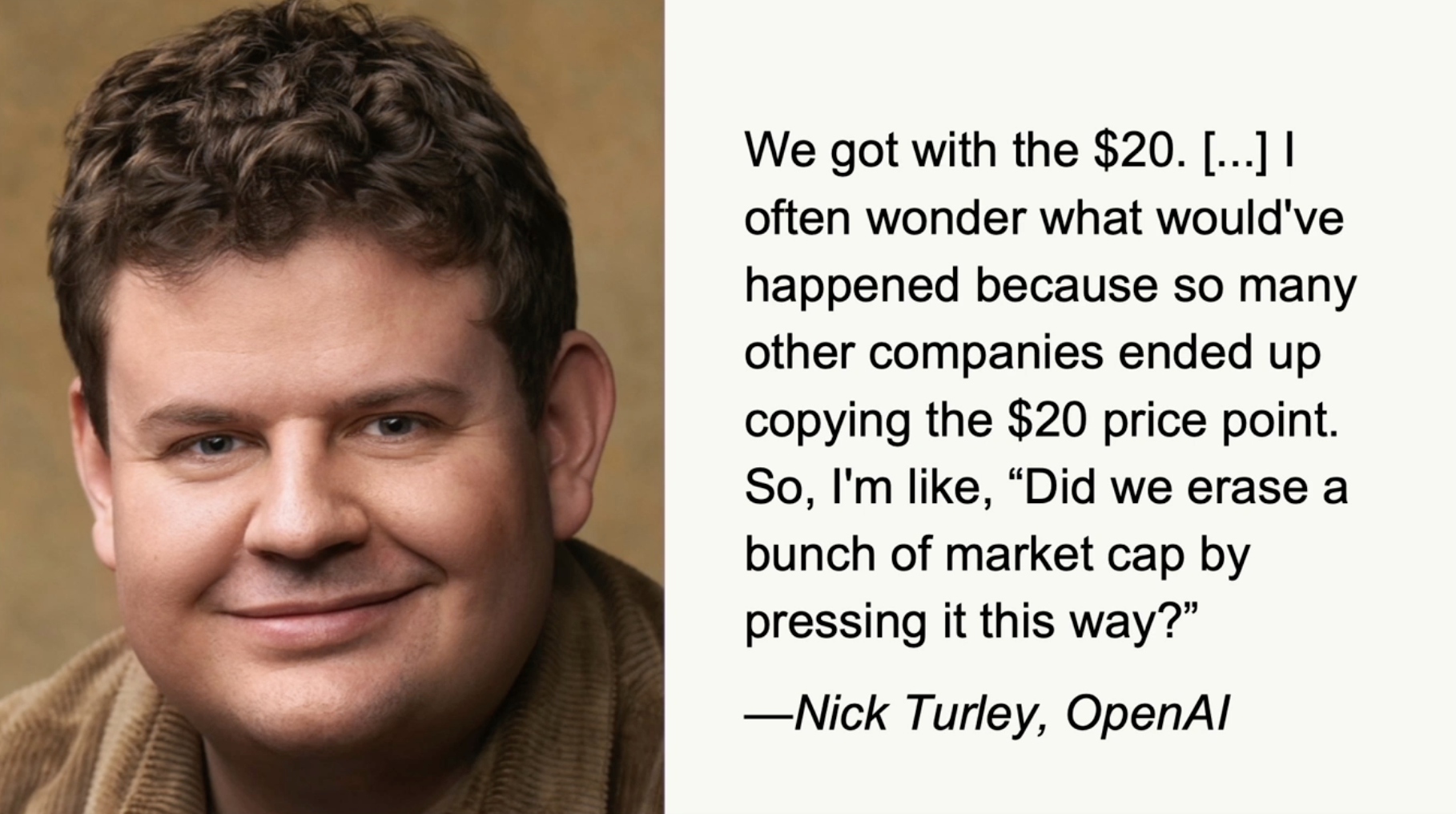
Once there’s an anchor, like the $20 monthly subscription for ChatGPT, changing the price point becomes much harder.
Next, when it comes to inference costs, it’s hard to predict what will happen. Hayder outlined three possible scenarios in which inference costs could go down, stay the same, or go up.
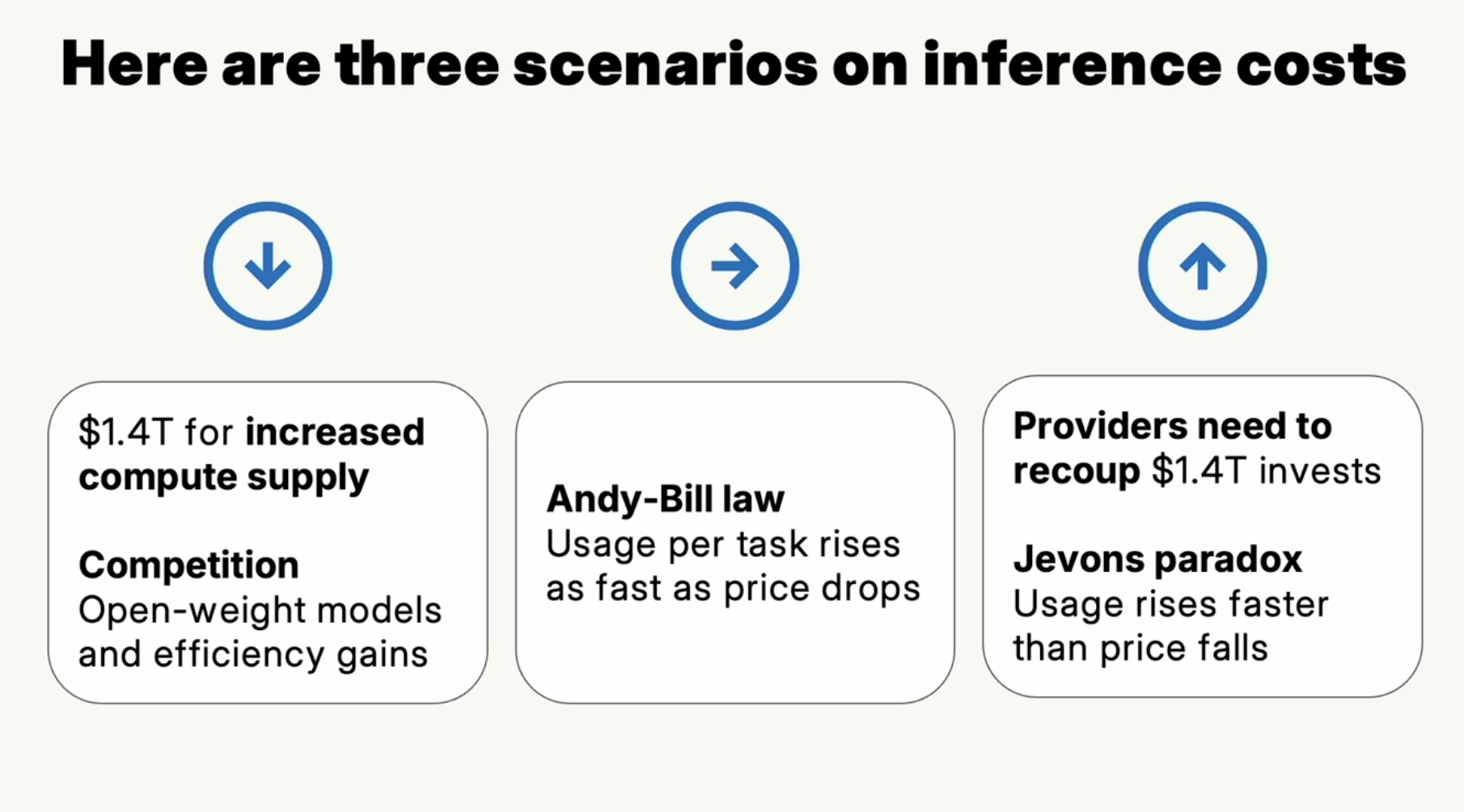
The key takeaway for product people? “You can’t bet the future of your business on any of those assumptions. You need to plan for the different scenarios,” said Hayder.
2 areas to focus on: Capturing value and managing cost
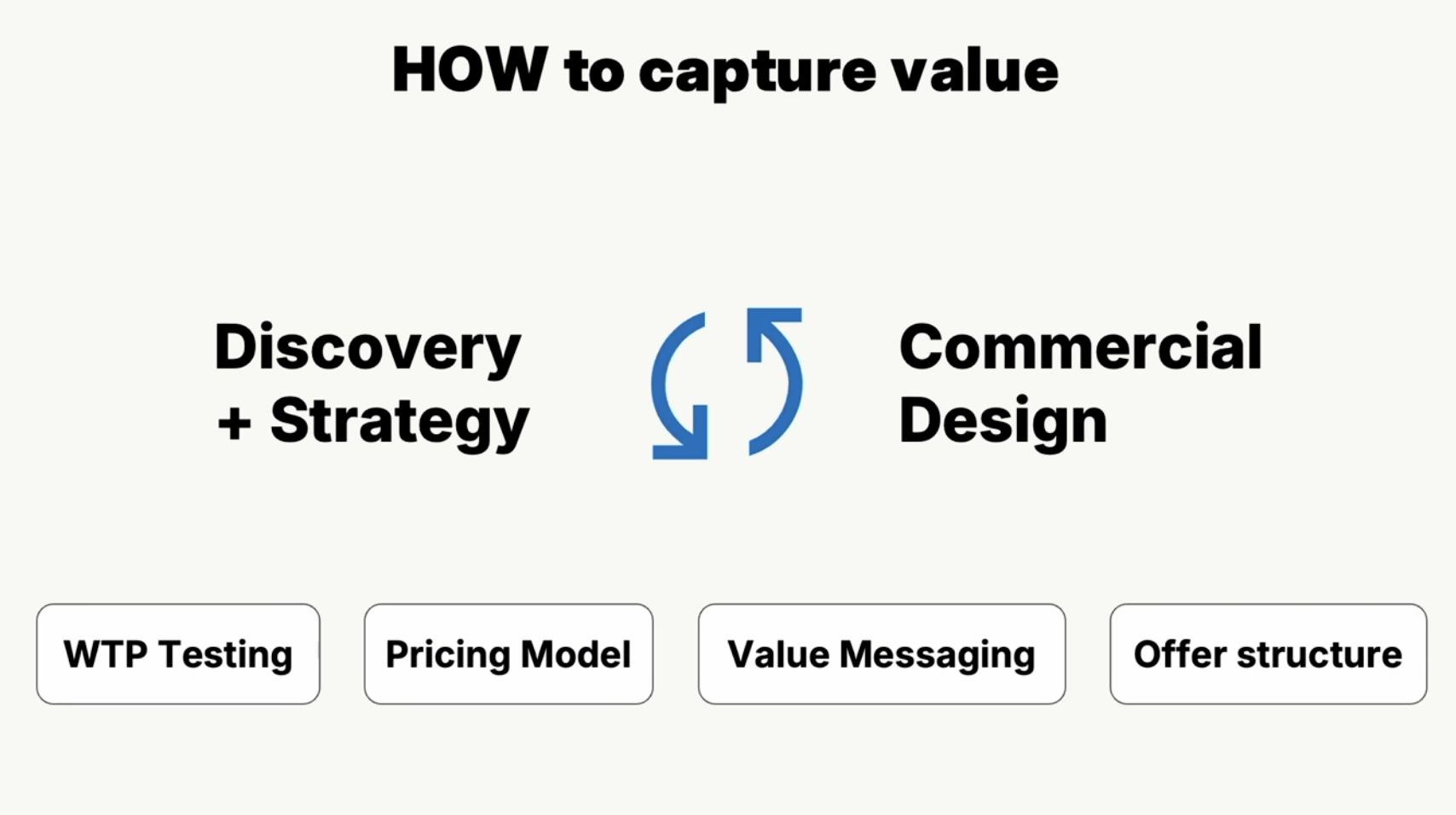
Hayder explained that there’s now a tight interlink between discovery and commercial design. He recommended engaging in activities like willingness to pay testing and evaluating offer structure to make sure the way you bundle and fence features makes sense to your customers.
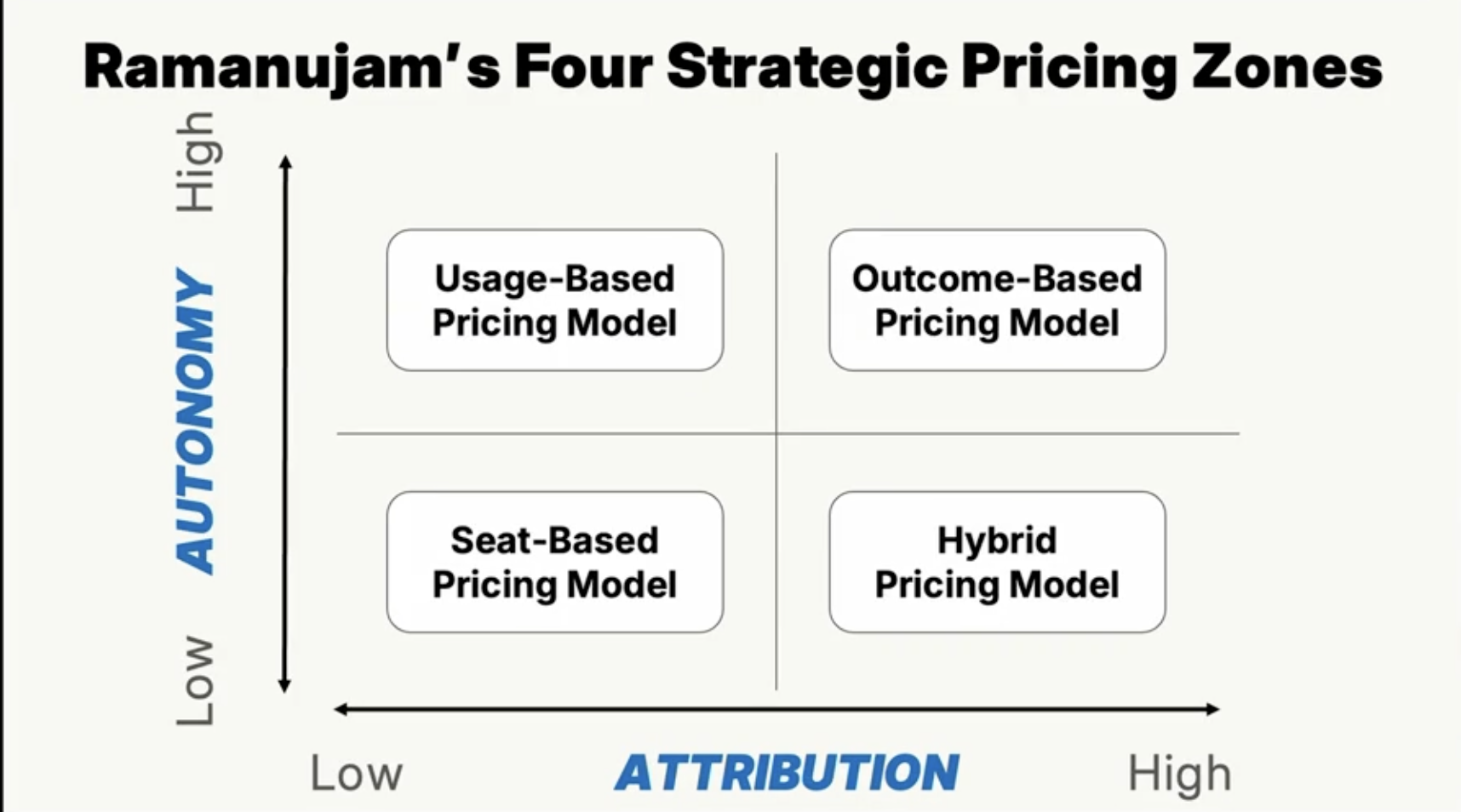
Hayder also shared Madhavan Ramanujam’s four strategic pricing zones for AI products (which you can learn more about in his book or his guest appearance on Lenny’s podcast). To sum it up briefly: It’s a 2x2 matrix where you can place products based on their autonomy (how independently the AI is able to get something done) and attribution (how well you’re able to attribute a certain outcome to AI).
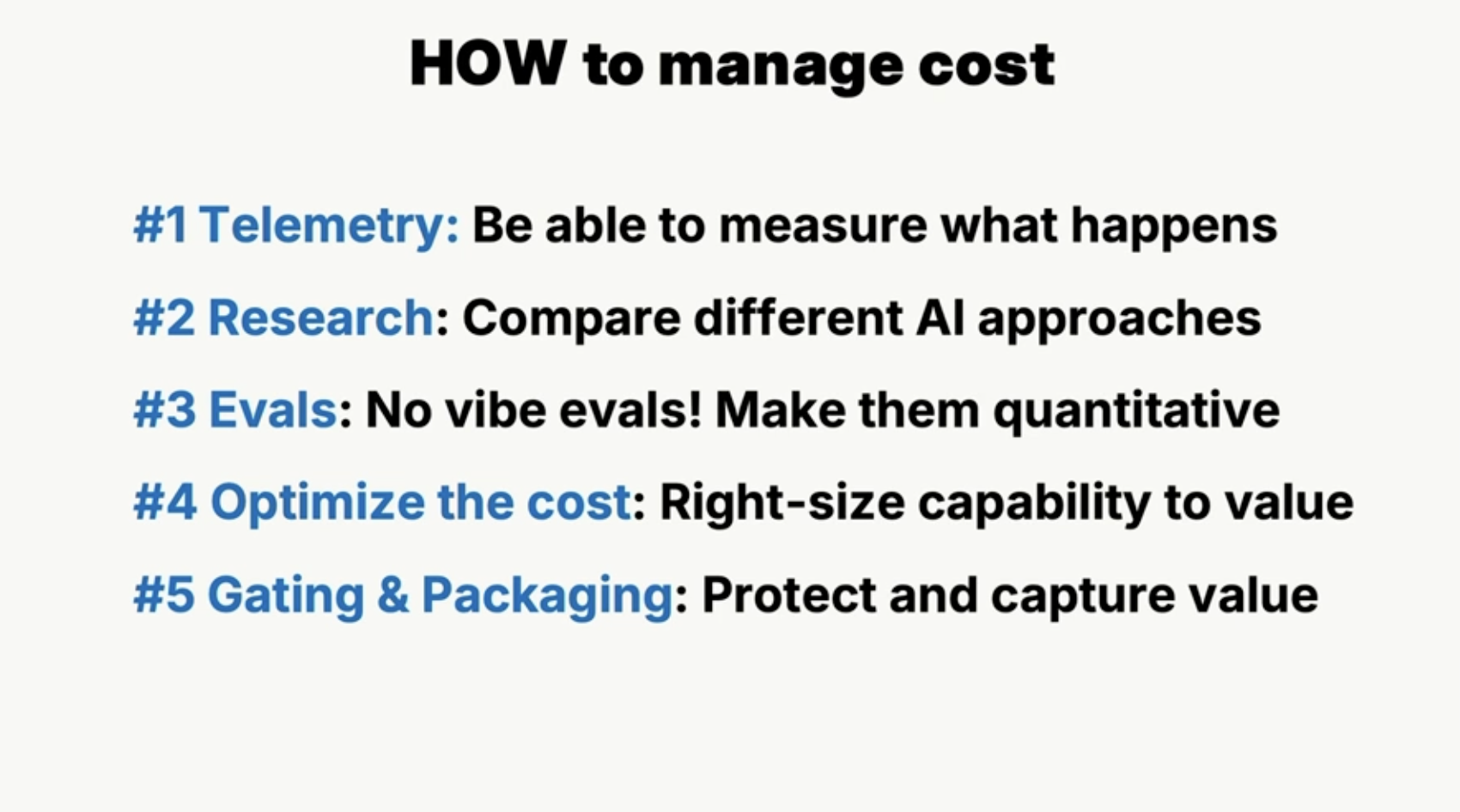
When it comes to managing cost, Hayder outlined several tactics, including telemetry—which involves ensuring you understand what’s going on in your product, what your customers are doing in your product, and how that could affect your margin—and gating and packaging decisions which determine which features you make available and which ones require additional payment to access.
What’s next? Action steps for product people
With this perspective on value and cost-to-serve, Hayder recommends taking three next steps:
Map it: Try placing your product on Ramanujam’s 2x2 grid to see where it fits. Are you currently in the right area?
Cost it: Find your cost-to-serve for different scenarios, user groups, and models.
Kick-start the conversation: Bring what you’ve discovered to the decision-makers in your organization who are able to act on it.
Remember that as a product person, you’re probably not expected—or really even allowed—to make pricing and packaging decisions on your own. But you do sit in a unique position where you regularly interact with all the functions that are involved in these decisions—C-level, engineering, sales, etc.
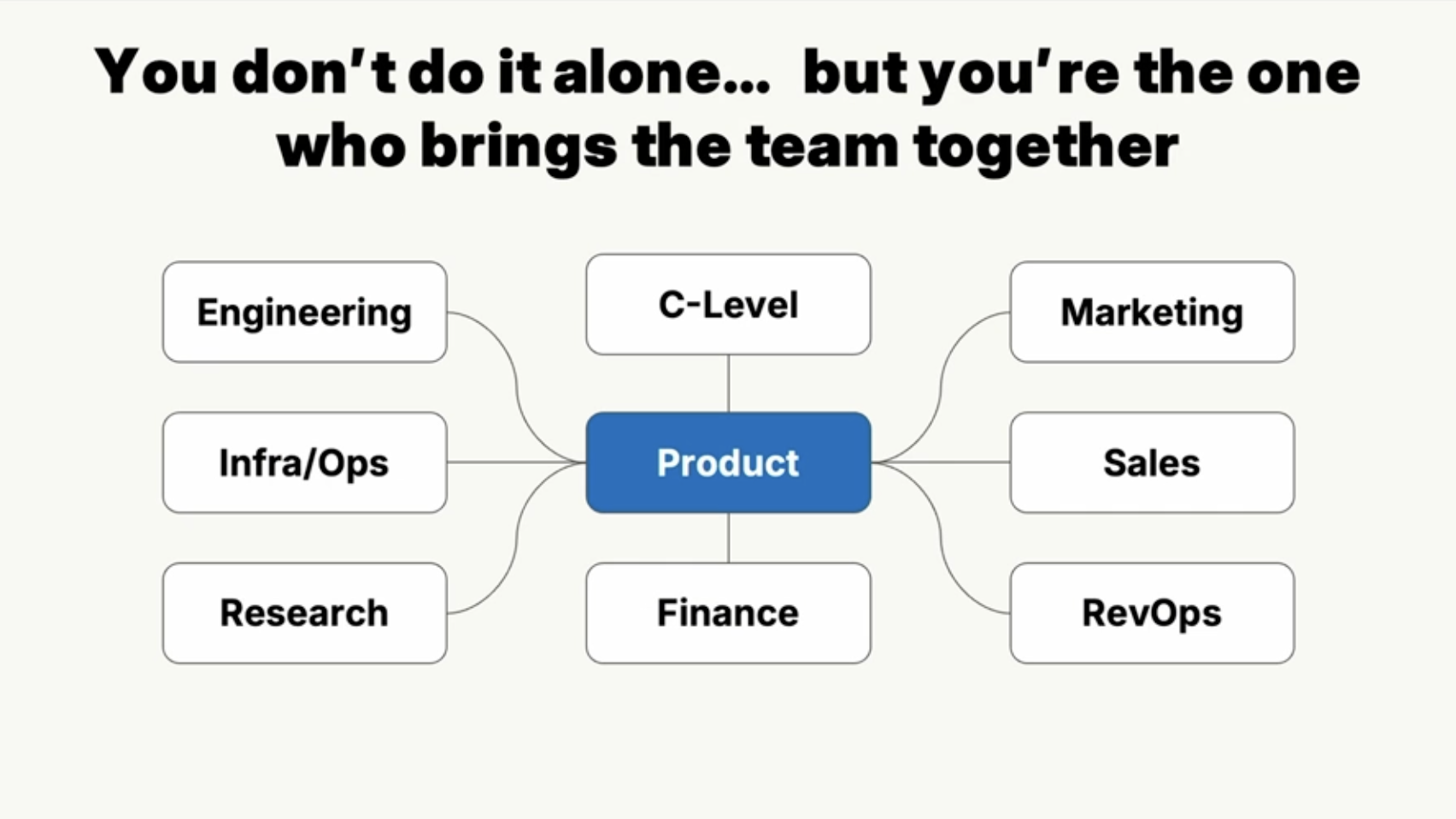
Use your conversations with these other functions to surface how you can capture more value and remind them of the cost-to-serve. Each of these discussions is an opportunity to remind your coworkers that AI product decisions are ultimately margin decisions.