
The essence of product is creation, but it’s easy to lose sight of that in the sea of administrative tasks and obligations that inundate our everyday work. And with all the AI tools now at our disposal, there’s even more temptation to put all our focus on accelerating delivery.
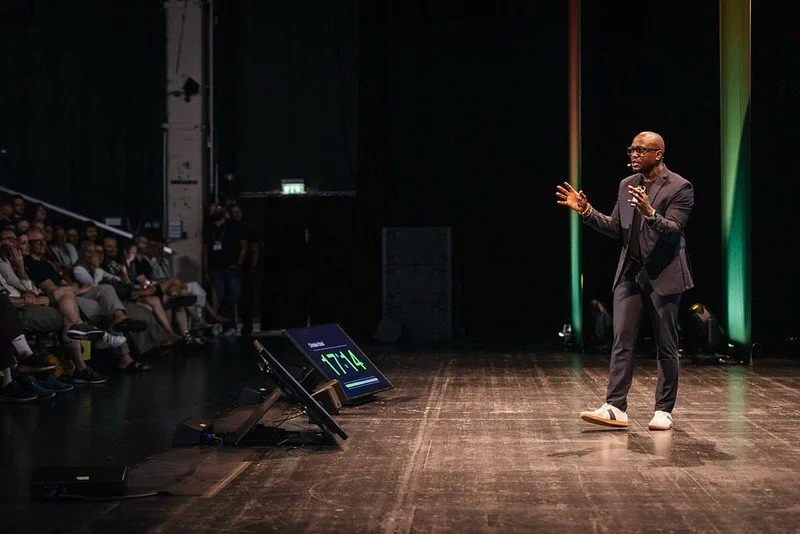
Silicon Valley Product Group Partner Christian Idiodi brings us back to the fundamentals of product creation in his keynote, The Era of the Product Creator. He examines how AI is changing the economics of discovery and delivery—and the implications this has on the core competencies for product people.
Watch Christian’s keynote below or read on for the highlights!
Meet Jim. He’s a 12-year product veteran whose workday is packed with activity.
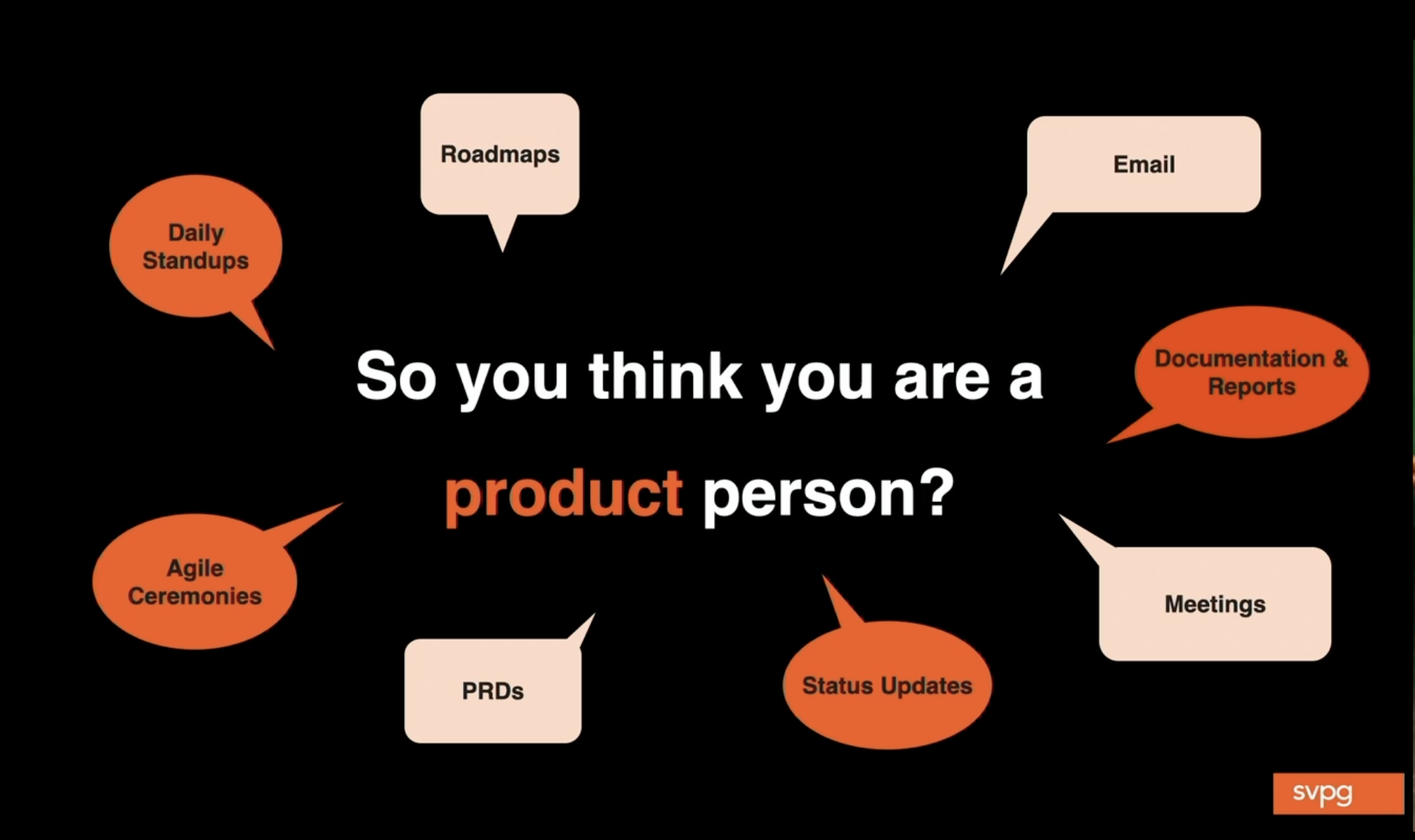
Christian took us through a typical Tuesday for Jim, full of standups, status updates, 1:1 meetings, documentation and reports, and of course endless Slack messages and emails. There’s no time for dinner with his family, let alone playing a game of foosball with his coworkers or relaxing in a massage chair. It sounds exhausting—and probably at least a little familiar to many of us.
But Jim’s story illustrates a bigger problem. According to Christian, “Over the past couple of decades, our profession has drifted towards administration and coordination. We’ve fallen in love with rituals, processes, and ceremonies to drive productivity.”
He then asked us to reflect on these powerful questions:
How much of your work is something you are making happen vs. something that is happening to you?
How much of your work is you reacting to things vs. you proactively prescribing what should be done?
Christian, along with the rest of the Silicon Valley Product Group, wants companies to recognize that Jim’s story—as familiar as it may feel—is not an acceptable definition of product work. And one of the things Christian feels most passionately about is reminding people why they fell in love with this discipline in the first place.
Why this topic matters right now: 3 structural forces that are converging
Christian explained there’s a reason why this topic feels particularly pressing right now. We’re in the middle of an era shift where three structural forces are converging. In a nutshell:
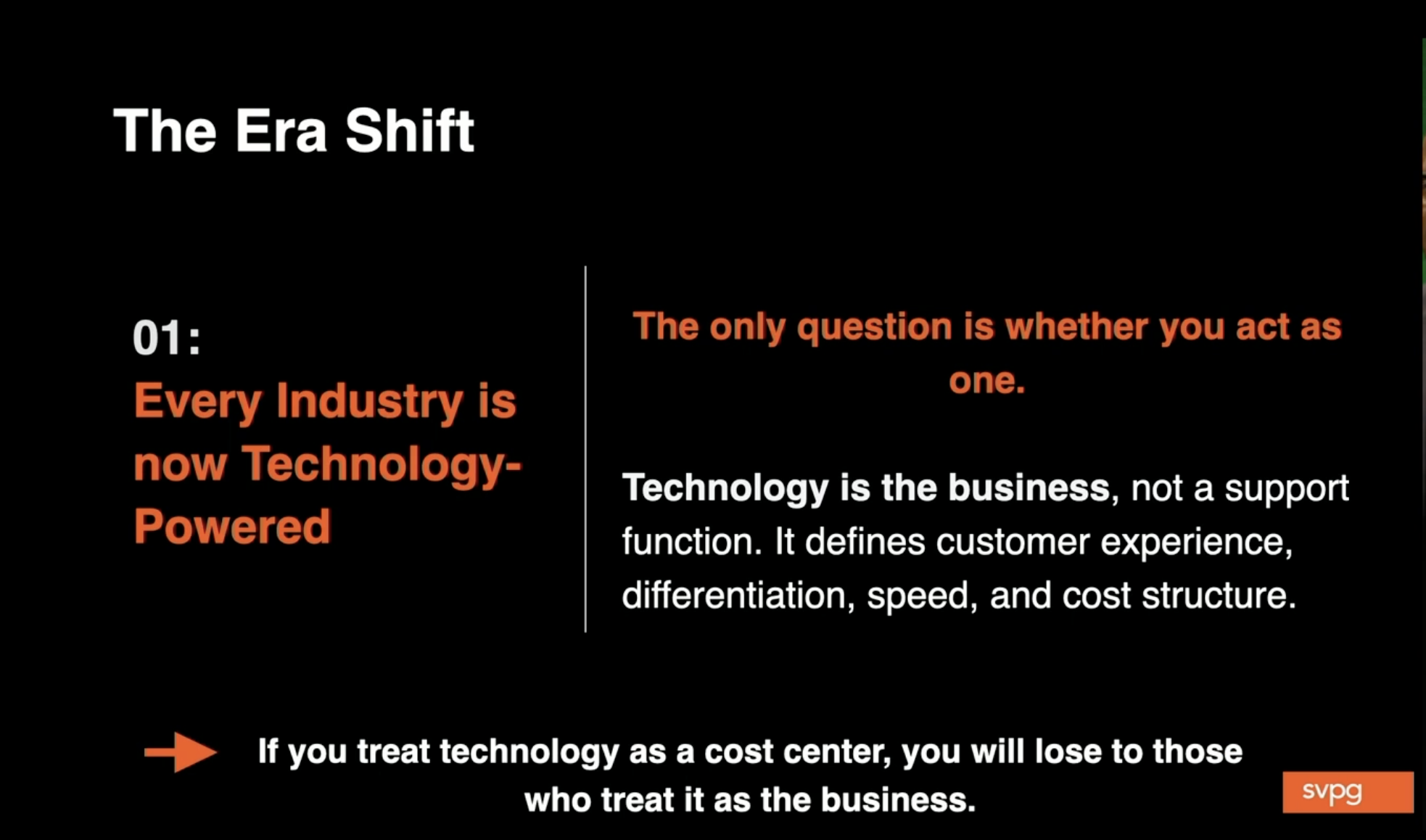
1. Every industry is now technology powered. This means that technology defines the customer experience, differentiation, speed, and cost structure.
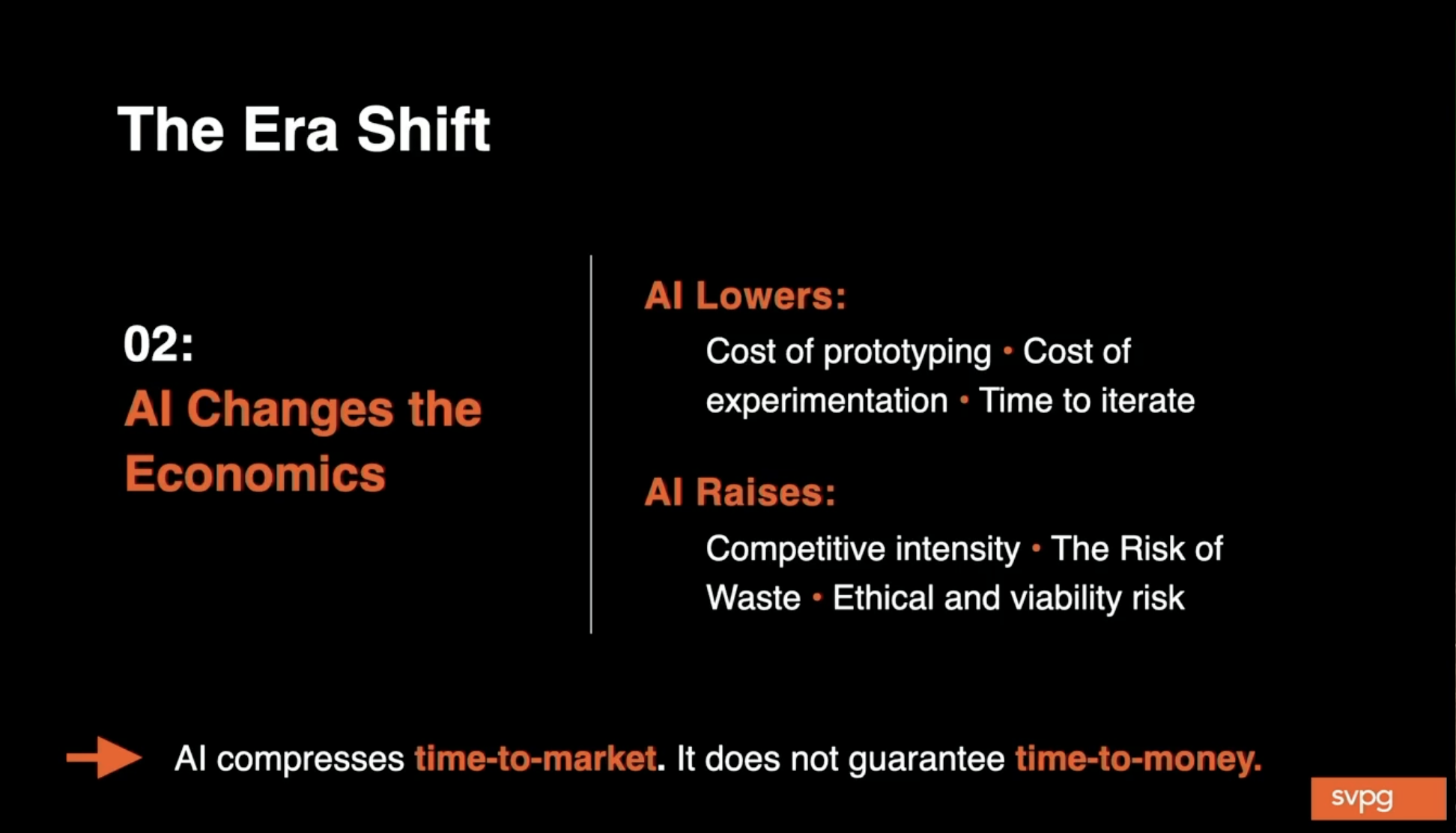
2. AI changes the economics. While it lowers things like the cost of prototyping and experimentation, it raises competition and risk, especially in terms of waste, ethics, and viability.
3. More efficiency leads to more demand. Yes, you can now accelerate many aspects of your work. But this just means that your customers’ expectations—and your competitors’ capabilities—have increased as well.
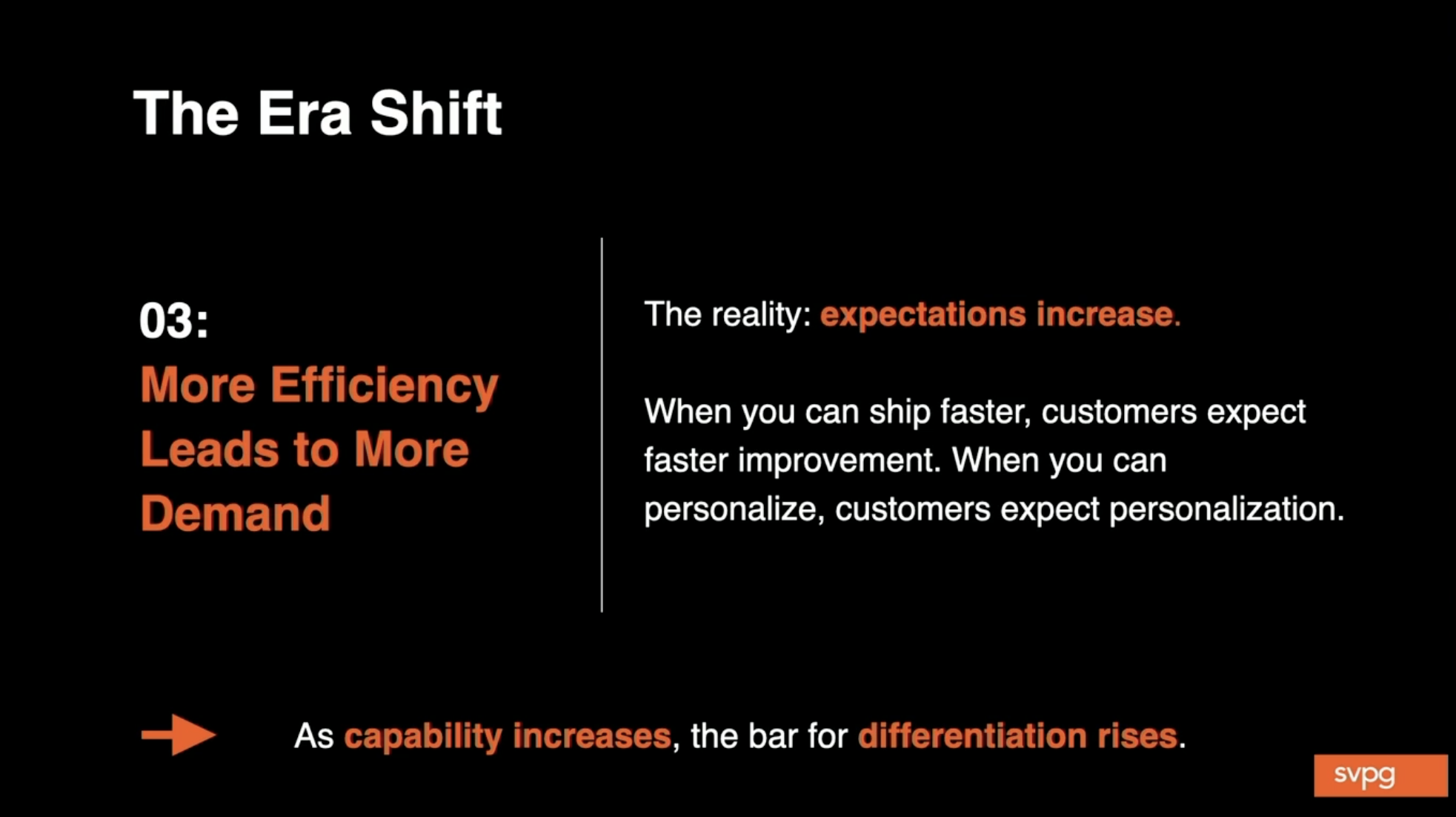
“AI does not reduce work; it just changes what’s now possible,” explained Christian. And, the real thesis of his keynote: “This is not a downsizing moment for product work; it is a bar-raising moment.”
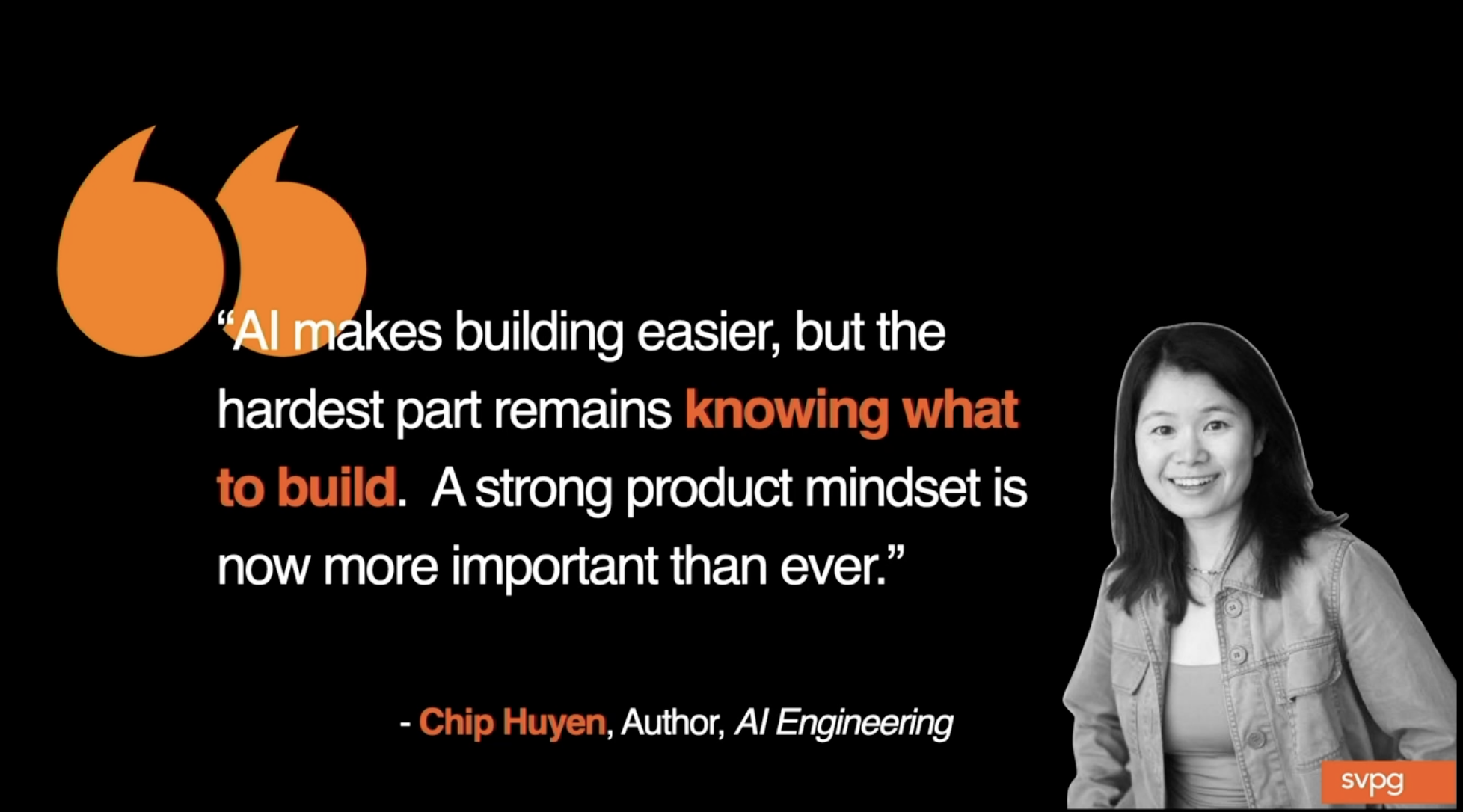
The product creator competencies
The necessary role of product, Christian argued, has always been to solve problems. It involves the craft of creating. While AI can accelerate certain aspects of our work, it does not replace judgment, taste, ethics, strategy, or leadership.
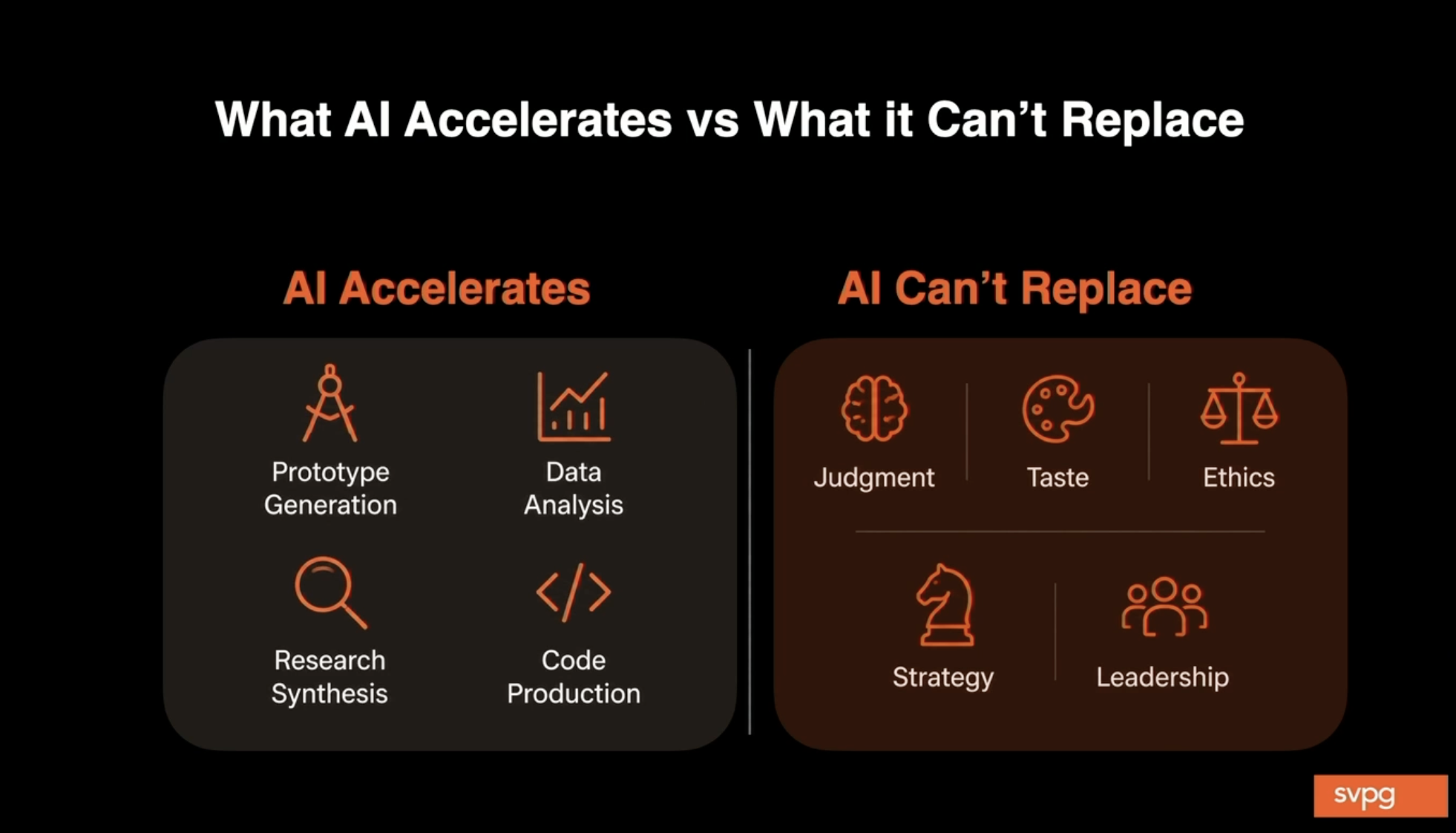
In other words, when solution generating is easier, problem framing becomes so much more important. And Christian broke down several product creator competencies that help ensure your problem-framing skills are sharp.
Product sense
Having a deep knowledge of your customers, your business, and your product—what Christian describes as “product sense”—enables you to make decisions that benefit the people you serve.
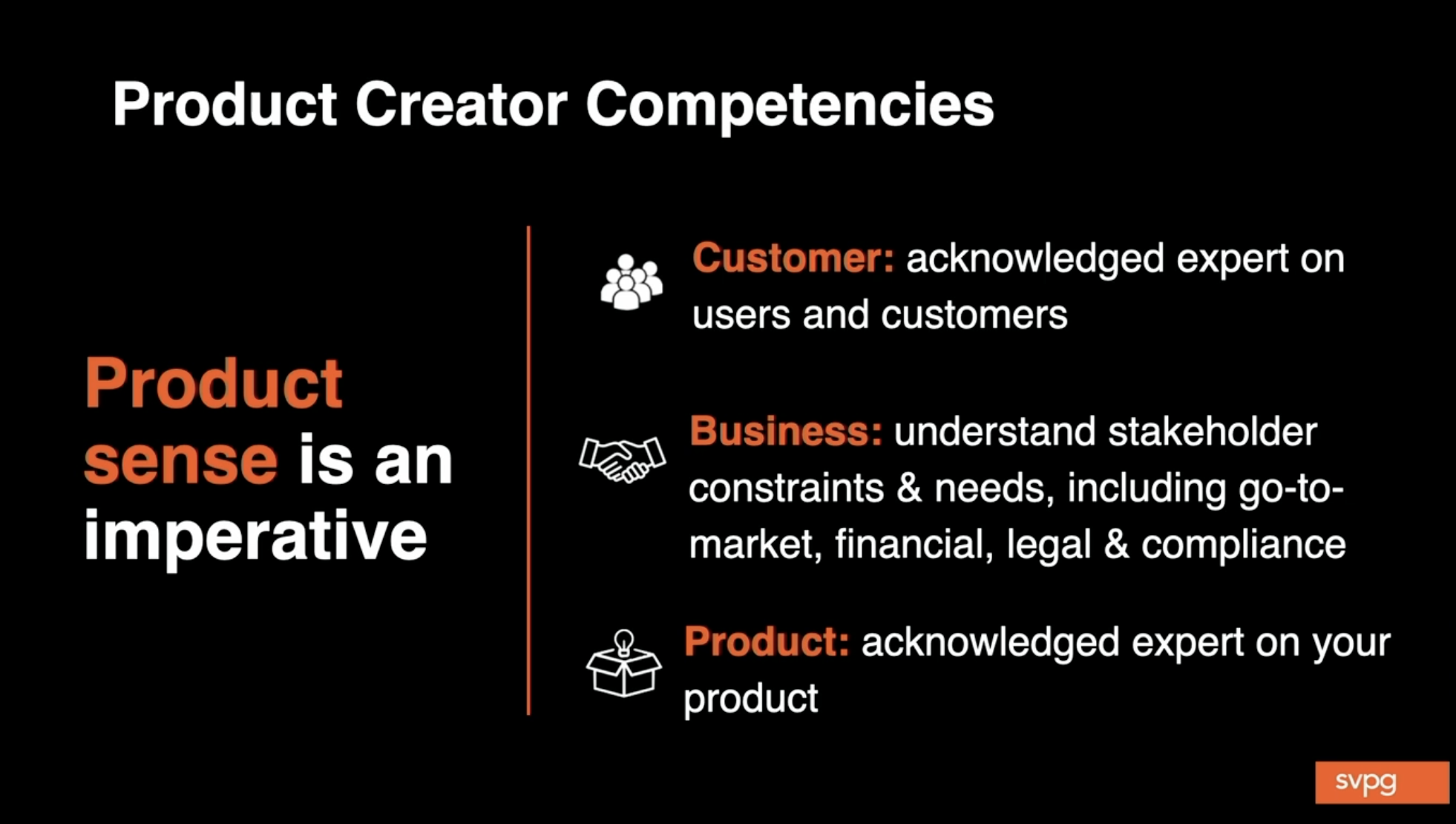
Business acumen
Understanding how your business works and the impact of product decisions on your business is critical. “If you can’t speak the language of business outcomes, you won’t be replaced by AI. You will be replaced by people who can,” said Christian.
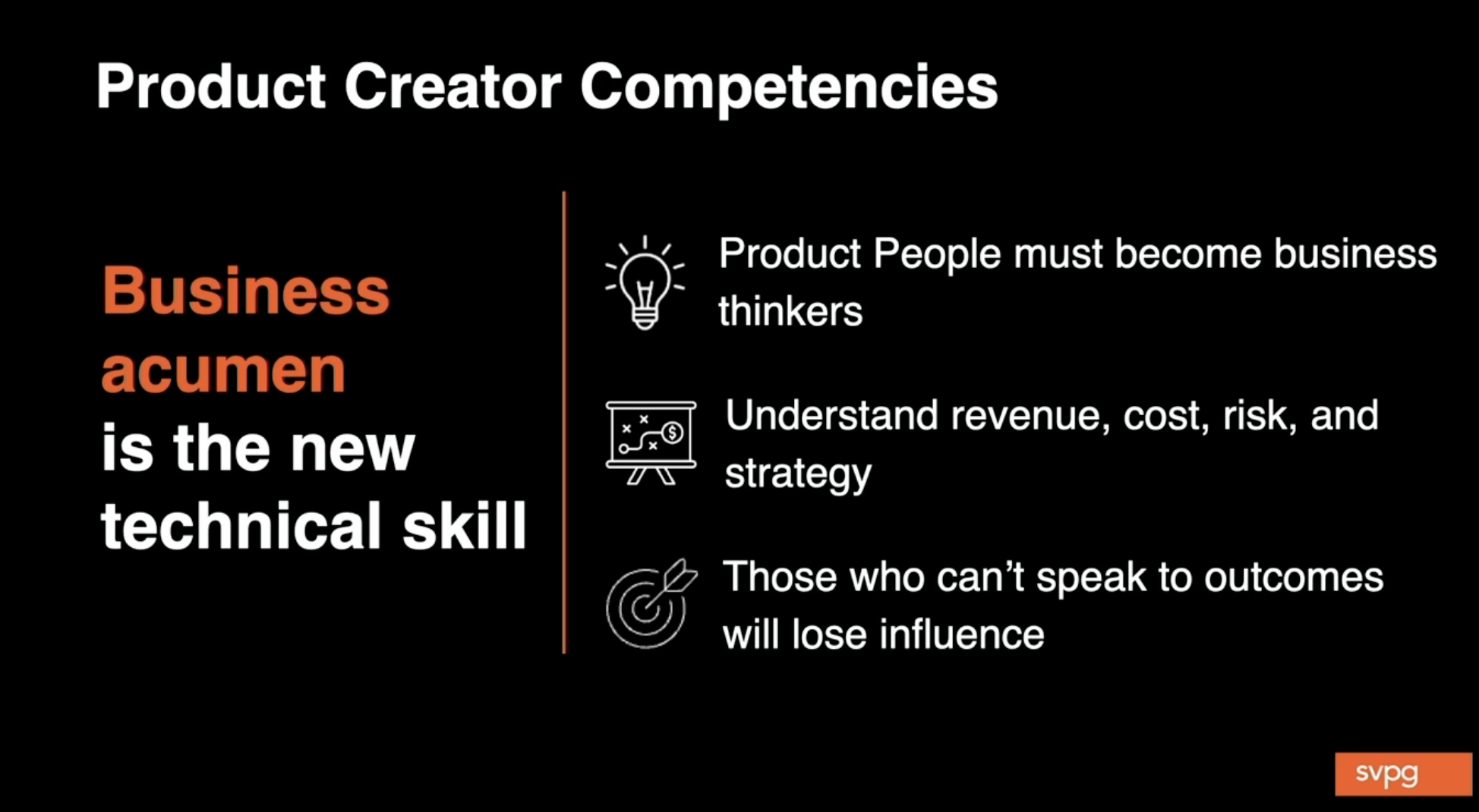
Strategy
As feature parity becomes easier to achieve, differentiation becomes everything. And strategy is the key to ensuring you’re focusing on the right things.
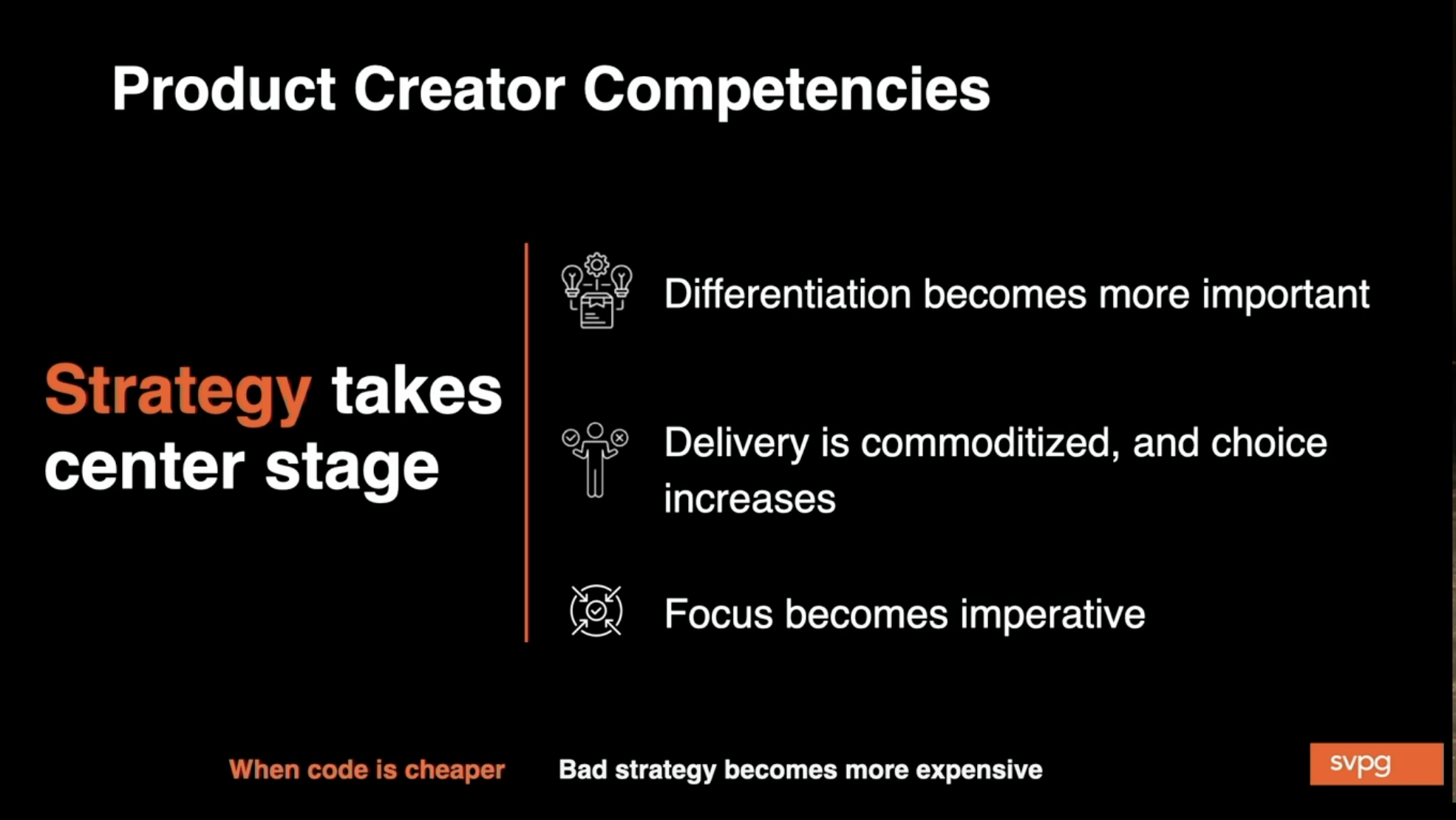
Discovery
At the end of the day, our products need to solve problems our customers care about (and that deliver value for our business). And discovery is the way that we can weed out bad ideas and focus on the most impactful ones. “In a world where everybody can build fast, discovery becomes a real competitive advantage,” argued Christian.
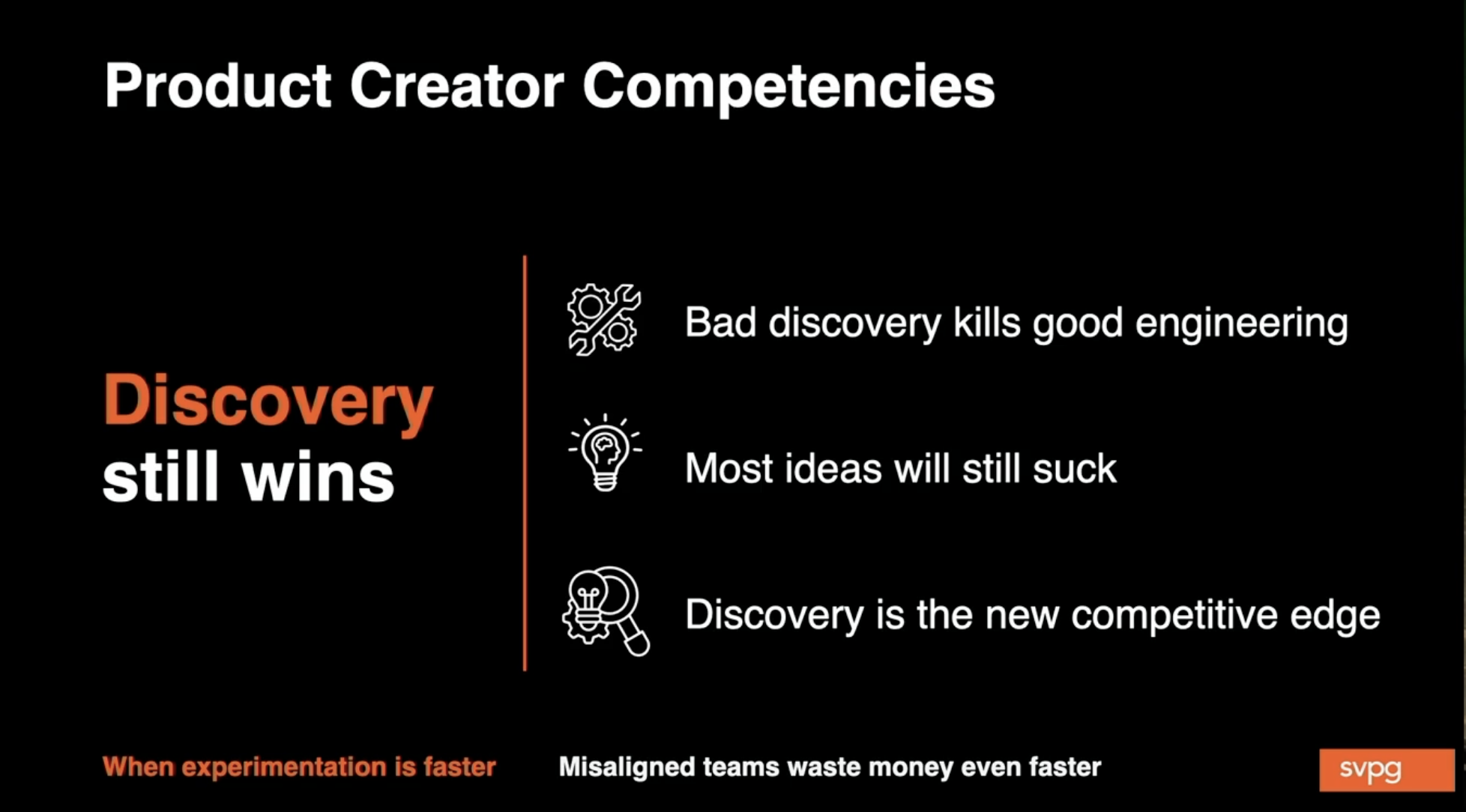
Human skills
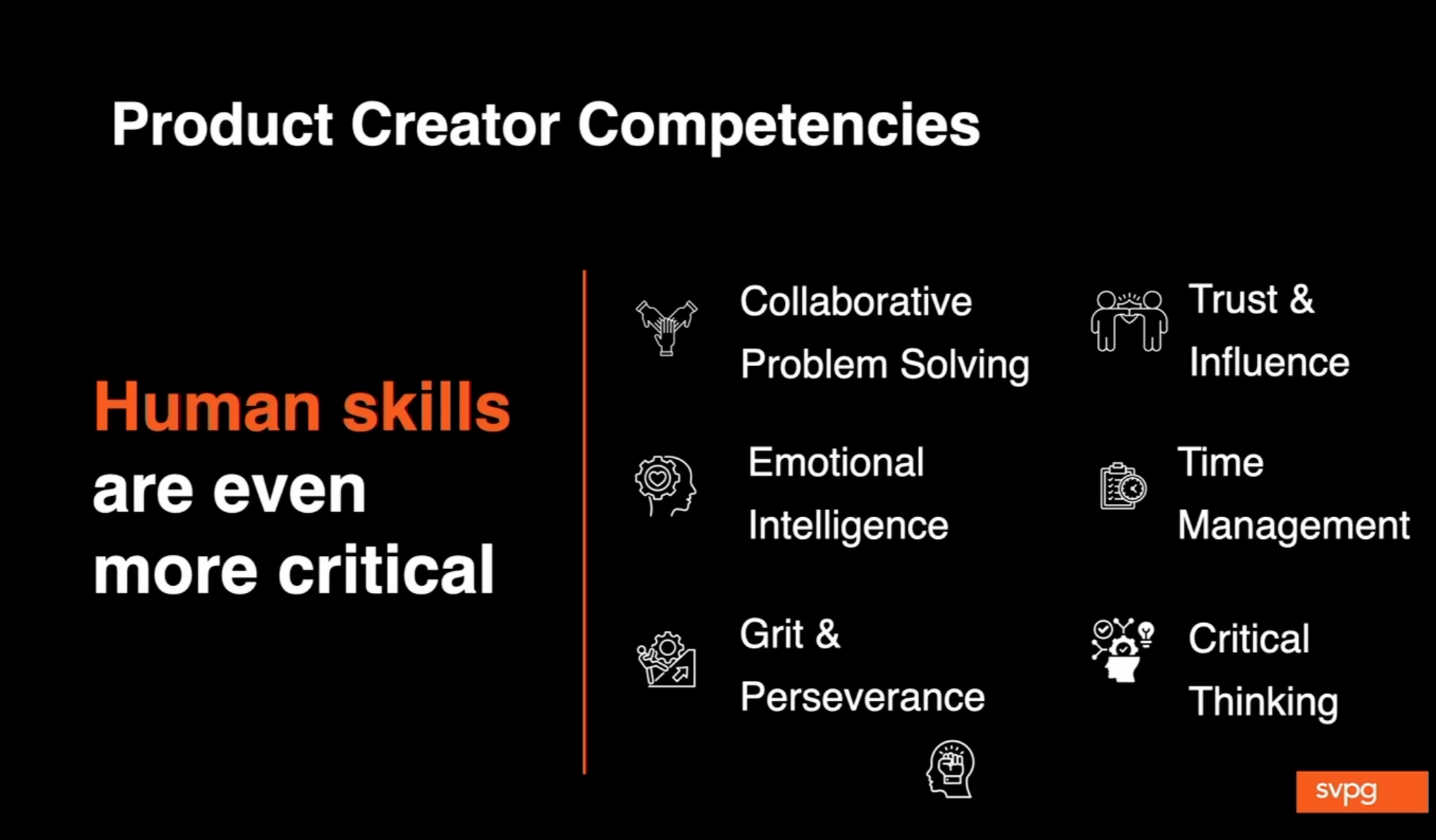
Despite all the technological advances (or maybe because of them), human skills are more in demand today than ever. Christian called out skills like trust and influence, emotional intelligence, and critical thinking.
The leadership mandate: Create the environment where creation can thrive
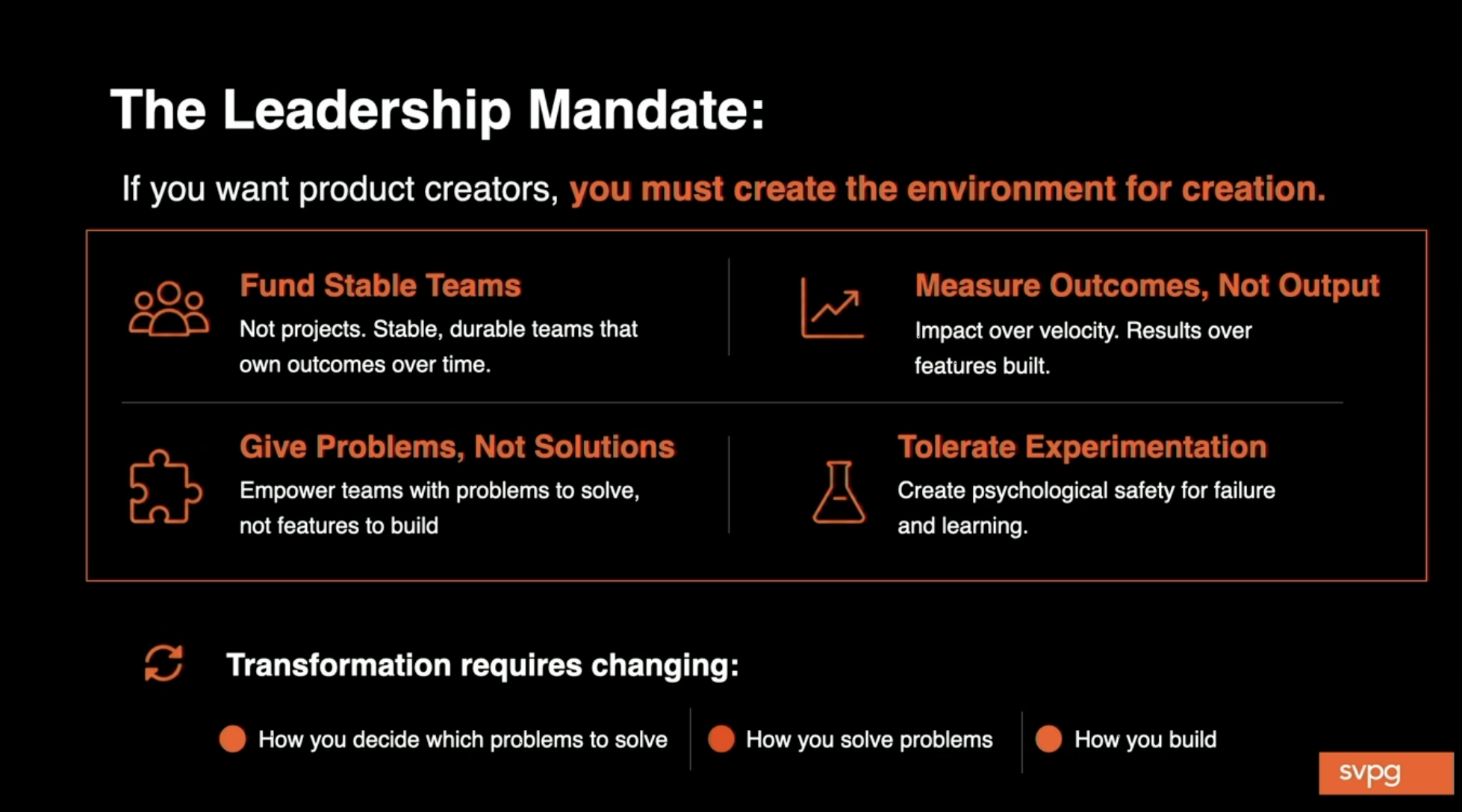
Leaders are not immune to all these changes, either. Christian had a clear call to action for product leaders: You need to create an environment for creation through actions like measuring outcomes and giving your teams problems to solve (rather than solutions to build). You cannot fund teams based on the project model and expect them to be creators.
A final reminder: The joy is in the creation
One of the reasons that stories like Jim’s are so disheartening is that his work is purely administrative and reactive. There’s no creation involved.
If you recall the last time you found joy at work, it was almost certainly a moment when you were creating something.
And part of the danger of AI is that it gives us the sense that we’re creating things faster than ever. But, Christian cautioned, the tools are just an amplifier. They’re not the answer. “Without product vision, AI is just random experimentation in your company. Without product strategy, AI is just noise. And without empowered teams, AI is just a faster way to build garbage.”
Let’s continue to build those creator competencies so that we can return to the essence of this work: to solve problems in meaningful ways that inspire people to give us something back in return.