
On June 26, Hamburg was on fire. Not just figuratively - it was the hottest day of the year, the kind of heat that makes you question every life choice that led you to a room without air conditioning. And that is exactly the room 18 hardware product people, and I found ourselves in for 90 minutes, turning Product at Heart into, for one session, Product at Hardware.
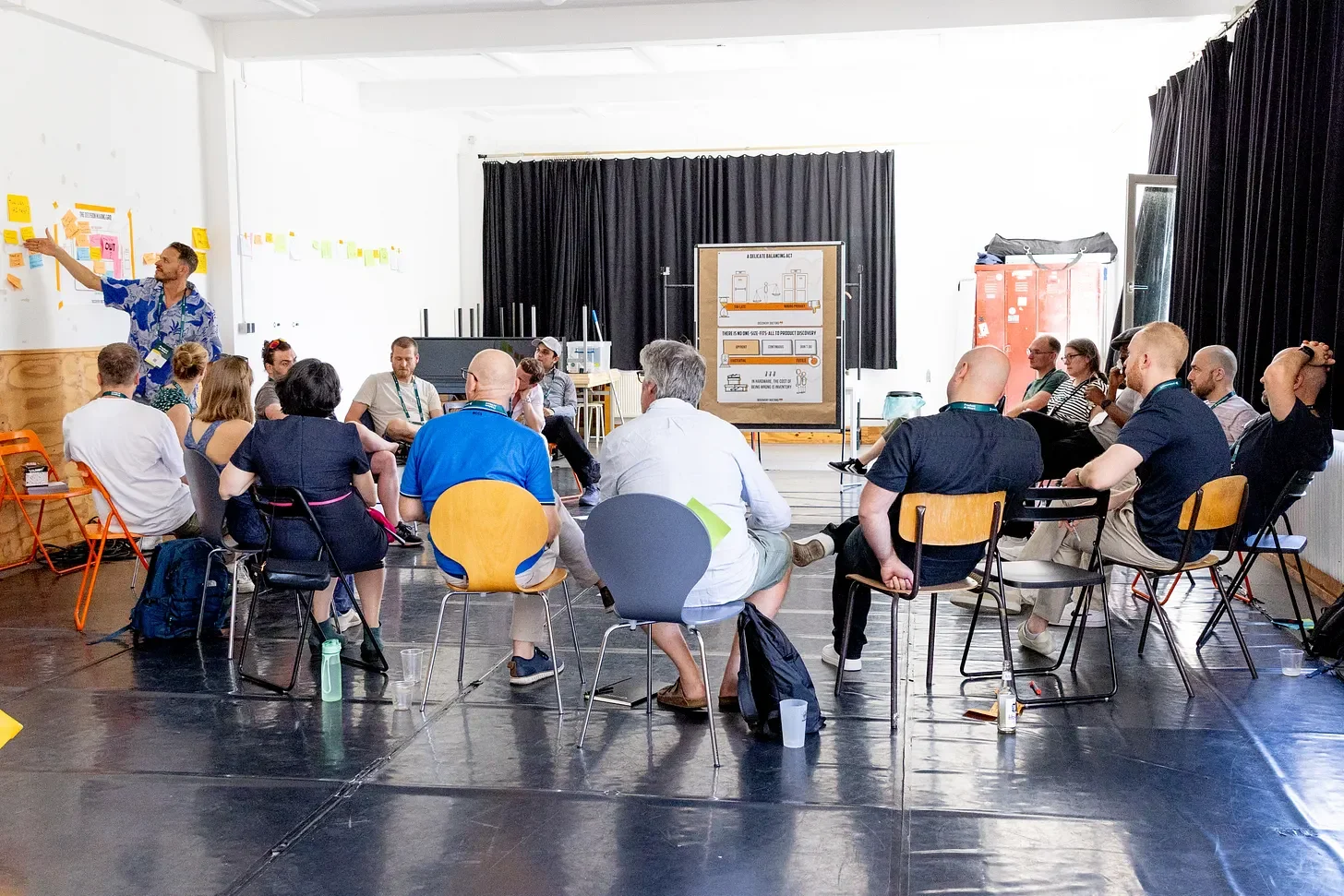
We’d just had two stellar opening keynotes - Christian Idiodi and Teresa Torres, both digging into the future of product management in the age of AI - and now it was up to me and an amazing group of hardware product people to follow that up in the context of hardware products.
Despite the temperature, energy from a shared passion soon filled the room. Throughout several interactive exercises, the group used the wisdom of the crowd to generate the best ideas for navigating the complexities of decision-making and product discovery in hardware, guided by a few tools, principles, and practices that I brought to the session.
“There's no Ctrl+Z in hardware”
That line was on a button I handed out at the end of the session as a fun memento, and it’s really the whole challenge in one sentence.
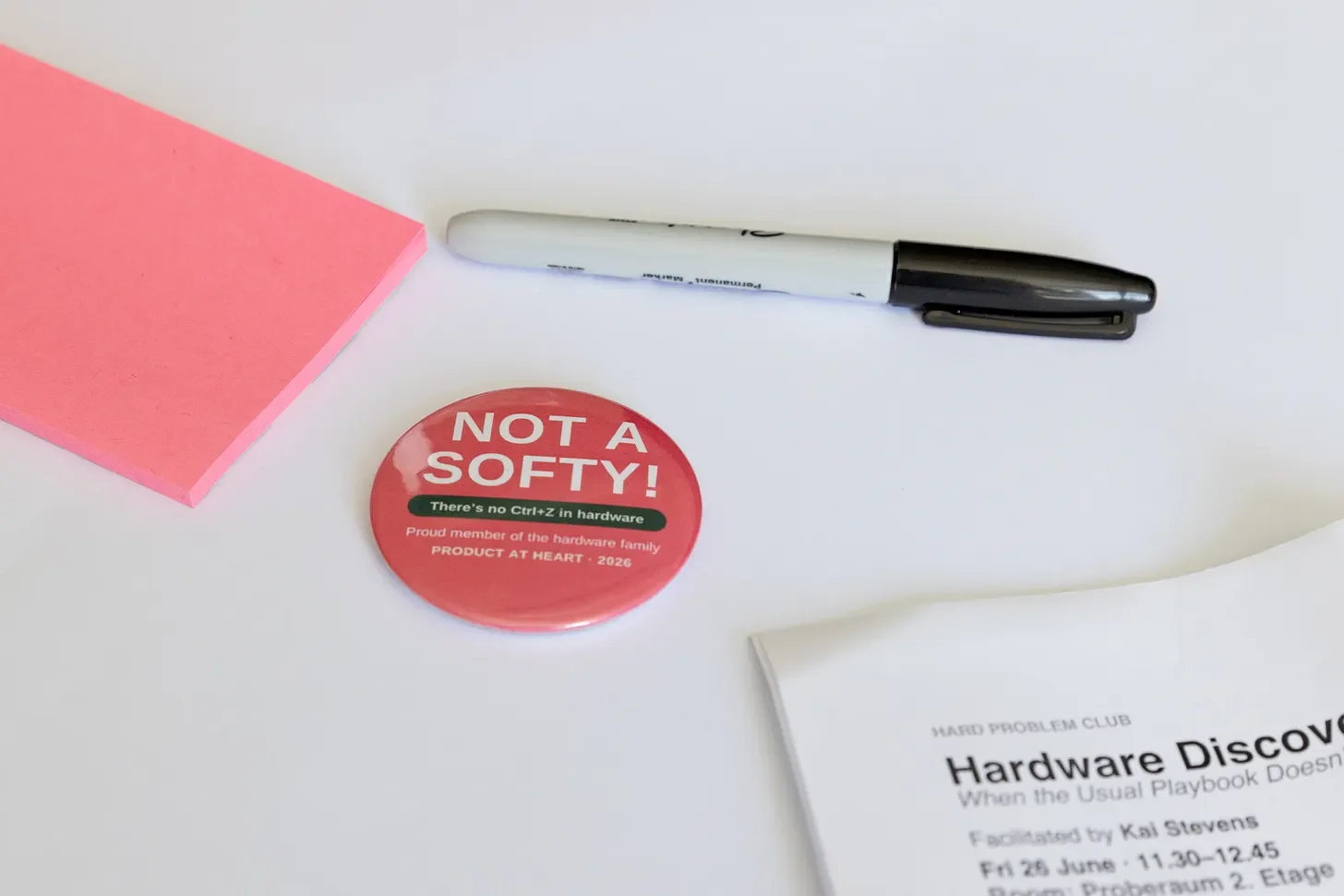
After eight years building smart thermostats at Toon and tado°, I’ve made enough hardware decisions to know the feeling: you commit to a PCB layout, order a tooling run, or lock a supplier, and there is no undo.
A software team can ship on Tuesday and roll back on Wednesday. A hardware team commits to a mould, and that mould becomes a fact of your life for the next two years or more.
So the first thing we did as a group was sit with that: in hardware, many of your product decisions are irreversible and highly consequential if you get them wrong. That combination creates enormous pressure on decision-making, and ideally, you want to bring in strong evidence to make these no-regret calls with confidence. Hardware products face more one-way door decisions.
A delicate balancing act
Having reflected on the weight of our decisions and the importance of collecting evidence before we decide, we then acknowledged that time is often not on our side. You still need to go to market with your product before your competitor does, before your investor loses patience, or to launch with the right momentum (September is the month if you build smart thermostats!).
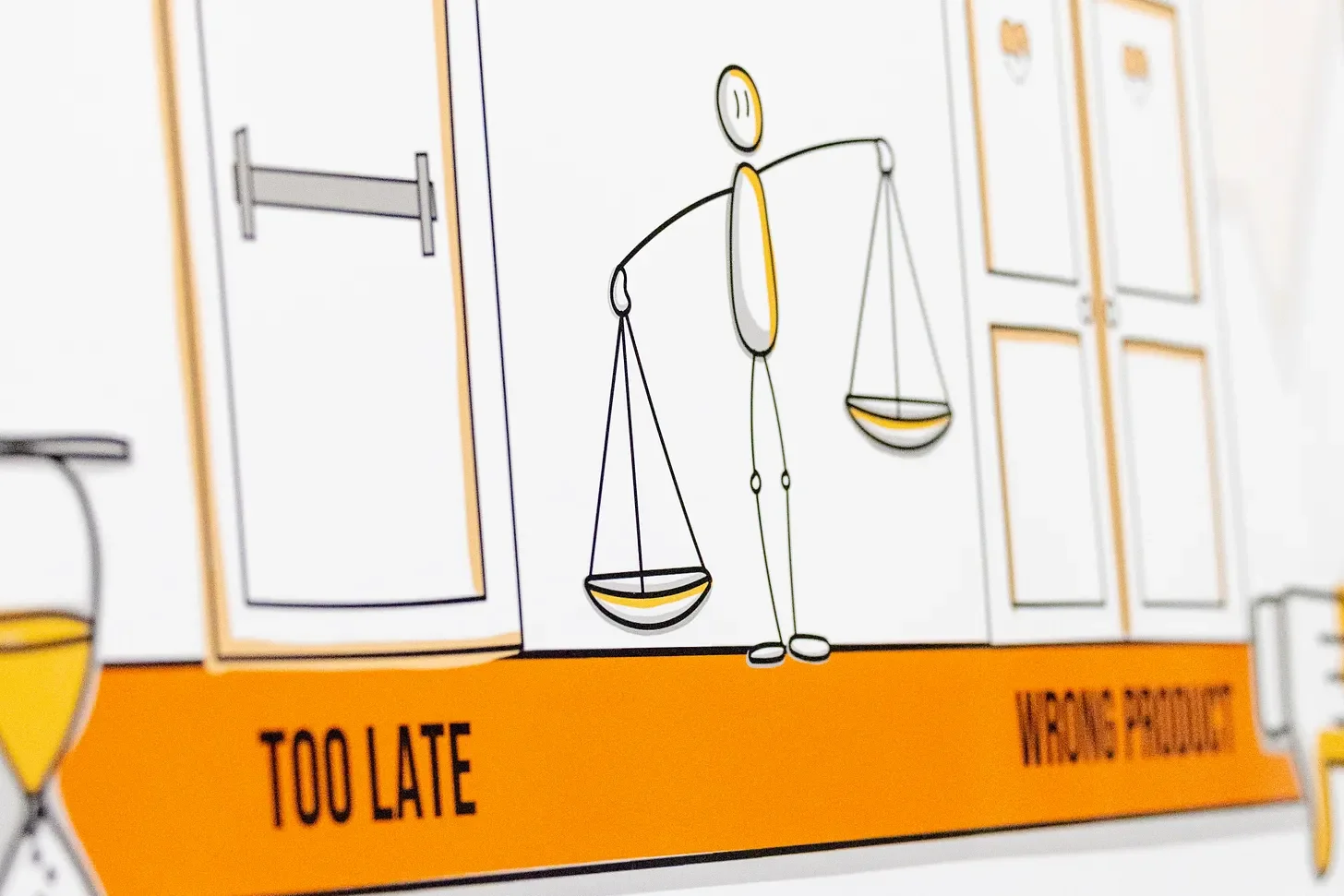
Given that you cannot validate everything upfront, there are two things a hardware product person should do. First, develop your toolkit to validate and collect evidence as fast as possible. Later on, we’ll see how AI can play a role here. Second, you need to consider carefully which decisions you want to focus on de-risking as a team.
The Decision Making Grid
The centerpiece of the session was a 2x2 I’ve been using with my own teams: uncertainty on one axis, reversibility and consequence on the other. First, we brainstormed all the decisions needed for the participant’s products, past and present.
Within minutes, we faced a long list of decisions. Given the usual time constraints, we then prioritized decisions on which to focus our de-risking activities, using the decision-making grid.
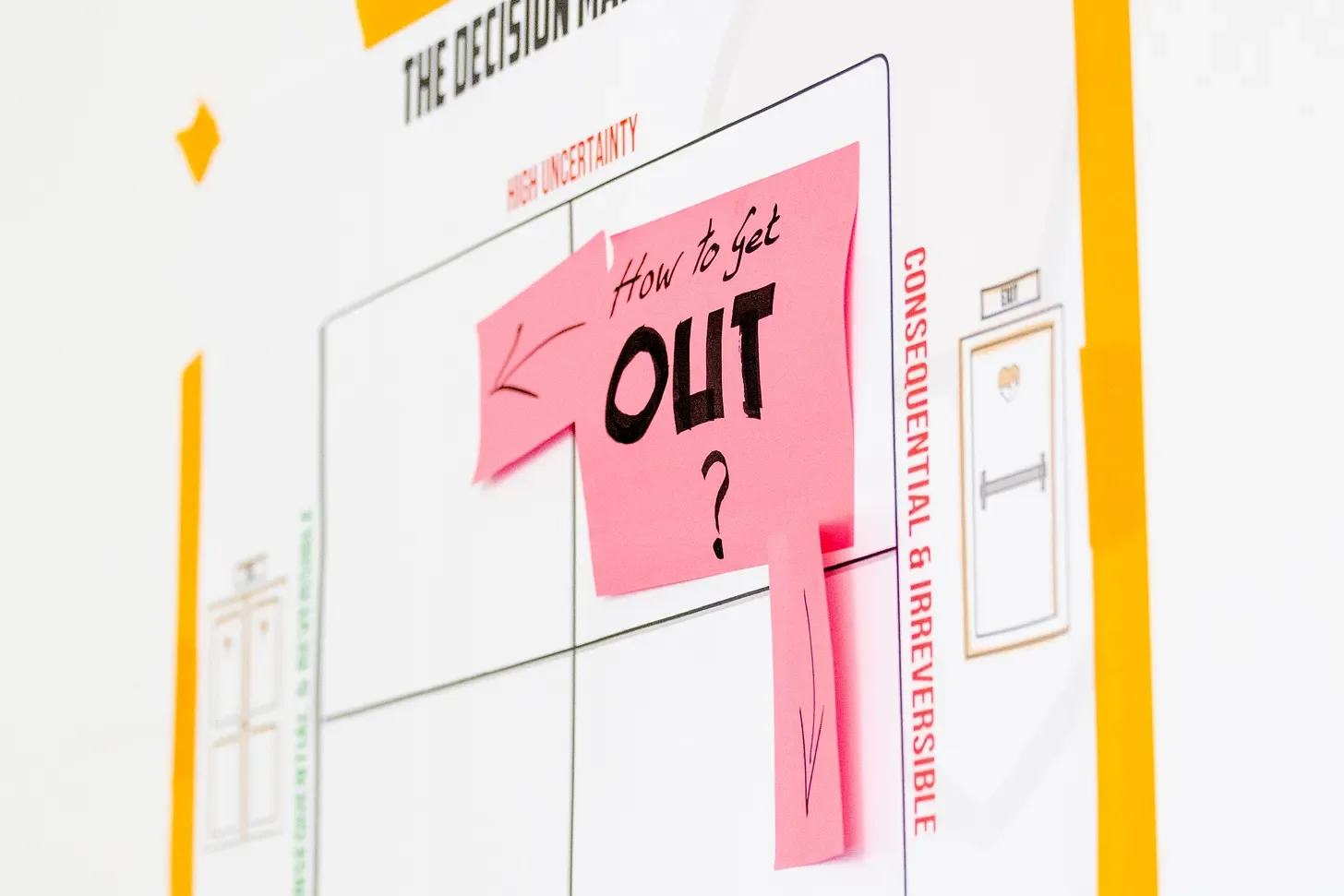
In the low-uncertainty, low-consequence corner, life is easy. That’s where you just build. The corner where it gets tricky is high uncertainty, high consequence: you want to focus on de-risking exactly these decisions! The group’s ideas for de-risking these decisions clustered into two moves: either shrink the uncertainty or shrink the consequence of being wrong.
To reduce uncertainty, the group soon agreed that product discovery should be used to validate assumptions and gather evidence. But the details matter here, and I prompted the group to get more specific: Which experimental techniques do you have in your toolkit to collect as much evidence as possible in as little time as possible? From customer interviews to prototype testing, you must have a deep understanding and skills in a wide variety of experimentation techniques so that you can always apply the one that is best in your context.
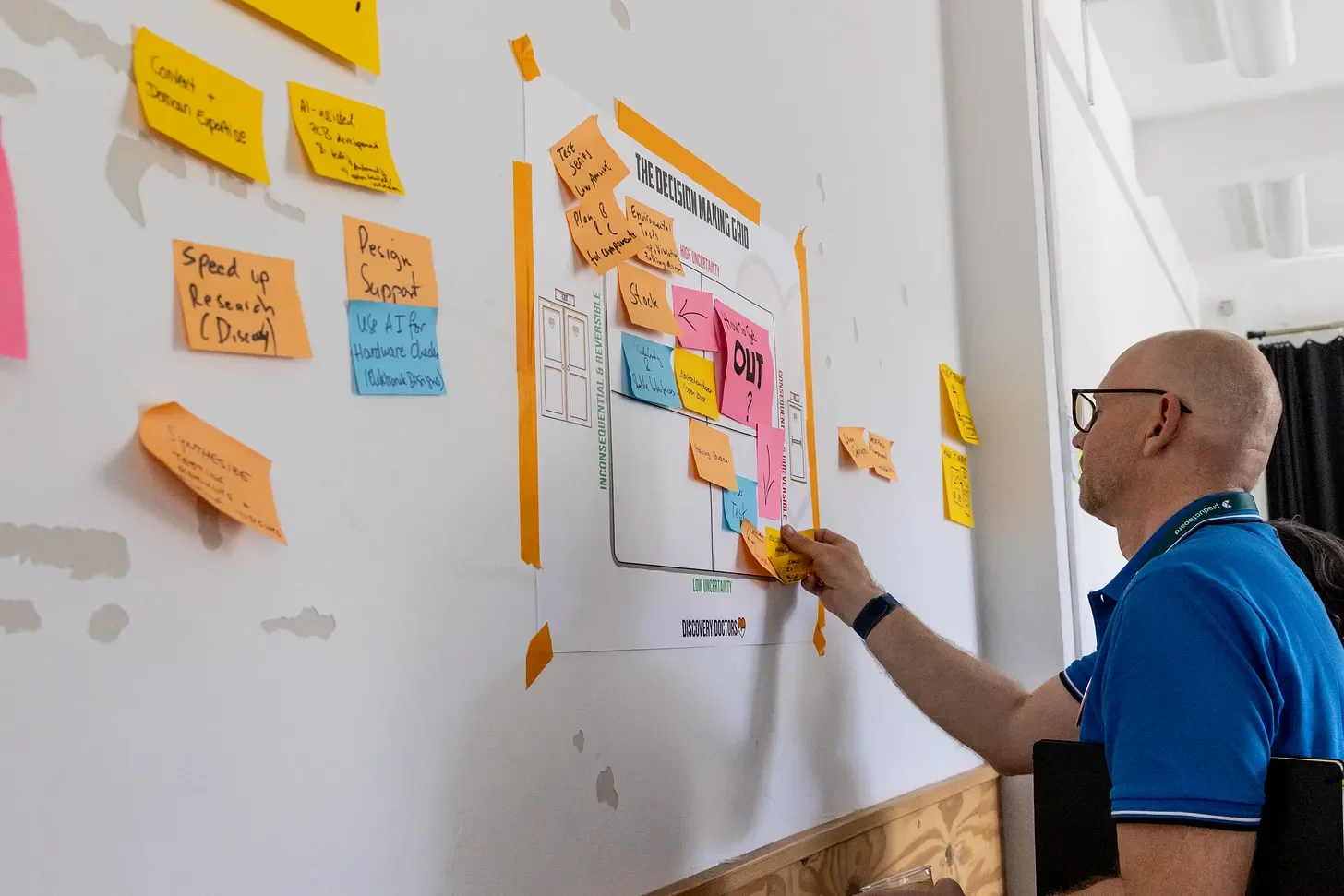
Then there was the second option, reducing irreversibility. We asked ourselves: What can you do to make your decisions more reversible in hardware? While this is often more difficult to answer, I was impressed by the participant’s ideas. From OTA (over-the-air) firmware updates to making the product more modular and more flexible component sourcing. In a reality where you cannot achieve high confidence in all decisions, it pays off to build an ecosystem that allows for greater reversibility.
And, because it’s 2026: how can AI help?
Of course, we couldn’t run a session at this year’s conference without tying it back to the day's theme, so we closed by brainstorming where AI actually earns its keep in hardware discovery.
The list the group built was more grounded than I expected: Making more realistic prototypes in less time; AI-assisted PCB development and test automation; using AI for hardware and electronic design checks; speeding up research during discovery; and synthesizing test results into findings faster than any of us could by hand. All examples where AI can accelerate the truth curve and support making no-regret decisions with greater confidence.
Sweaty, but 100% worth it
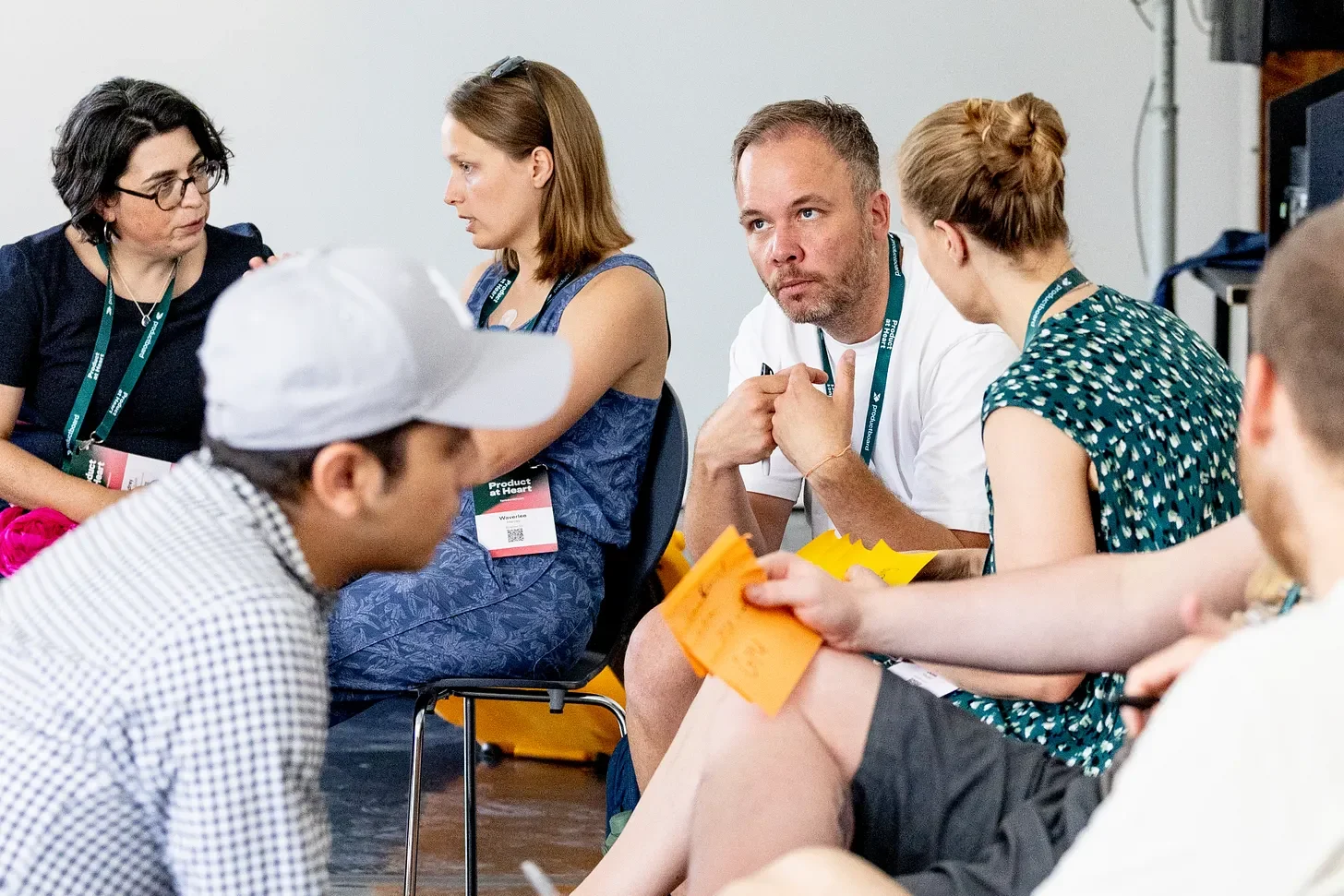
Despite the heat, everyone stayed in the room with lots of energy. Nobody left early, and the questions kept coming well past our slot. That’s the best compliment a Hard Problem Club can get, and I really enjoyed every minute.
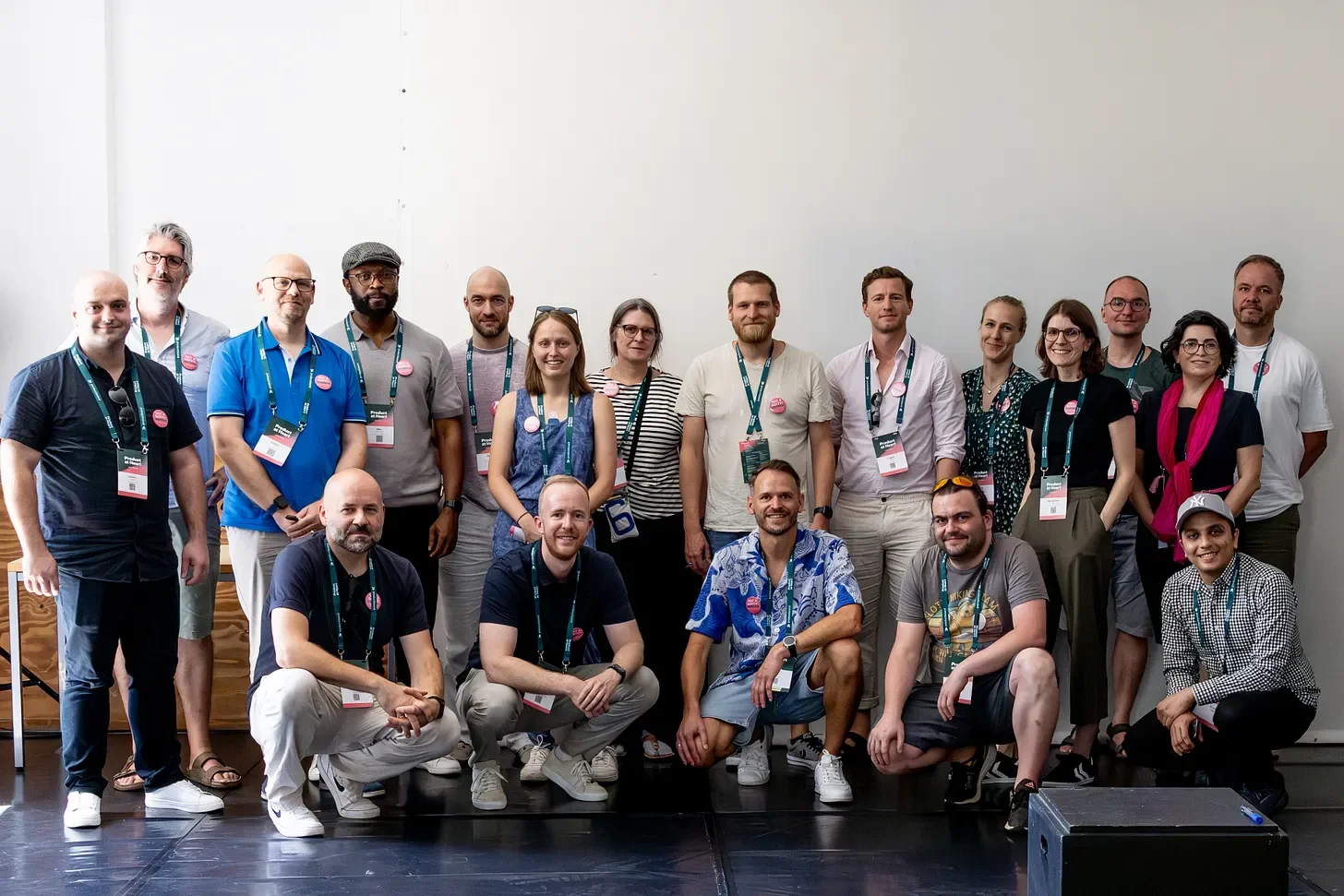
Huge thanks to everyone who showed up and gave it their full attention despite the tropical conditions, and to Petra Wille and Arne Kittler for building a conference where a room full of hardware people can have this conversation. See you next year, hopefully with milder temperatures, but with the same passion and energy for our product craft.
Find more posts from Kai on his blog or connect with him on LinkedIn.