
Too Much of a Good Thing? What Product People Need to Understand About Digital Afterlives
Product design has always involved understanding human behavior and meeting human needs. But the products we're designing today have an unprecedented ability to directly tinker with our psychology.
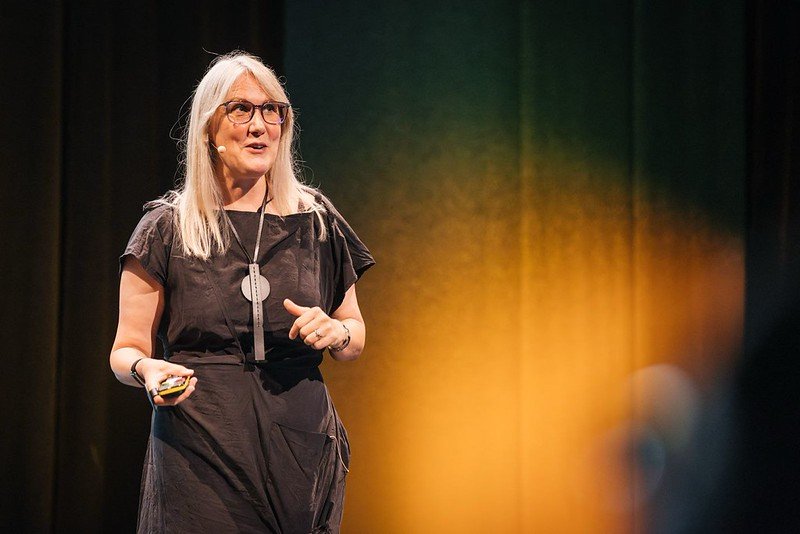
Cyberpsychologist and Professor Elaine Kasket’s keynote weaves four principles from the Makers Manifesto along with real-life “death tech” products and case studies, asking us to evaluate whether death tech products may be too much of a “good thing.”
We’ll share a few highlights here, or you can watch Elaine’s entire keynote below.
A brief introduction to the digital afterlife industry
Elaine has been studying the digital afterlife industry (also referred to by the acronym DAI) for the past 20 years.
What exactly is the digital afterlife? It’s the legacy we leave behind through every digital trace we generate. This includes every:
Heartbeat (monitored through our phones or fitness trackers)
Location
Social media post
Message
Purchase
Lab result
Transcribed work call
Dating profile
Browser search
LLM prompt
Genetic sample
Photo or video we take or that’s taken of us
It’s awe-inspiring when you stop to consider the breadth and depth of your digital afterlife—and even more so when you realize we largely have no control over ours.
Elaine explained that the digital afterlife industry today is worth billions, and the death tech space is a Wild West in which hardly any regulation governs or limits what you can do with deceased people’s data.
“Today there are thousands of products being built to address and perhaps capitalize upon the fact that your data doesn’t disappear when you do and it remains in these heavily centralized places,” she said.
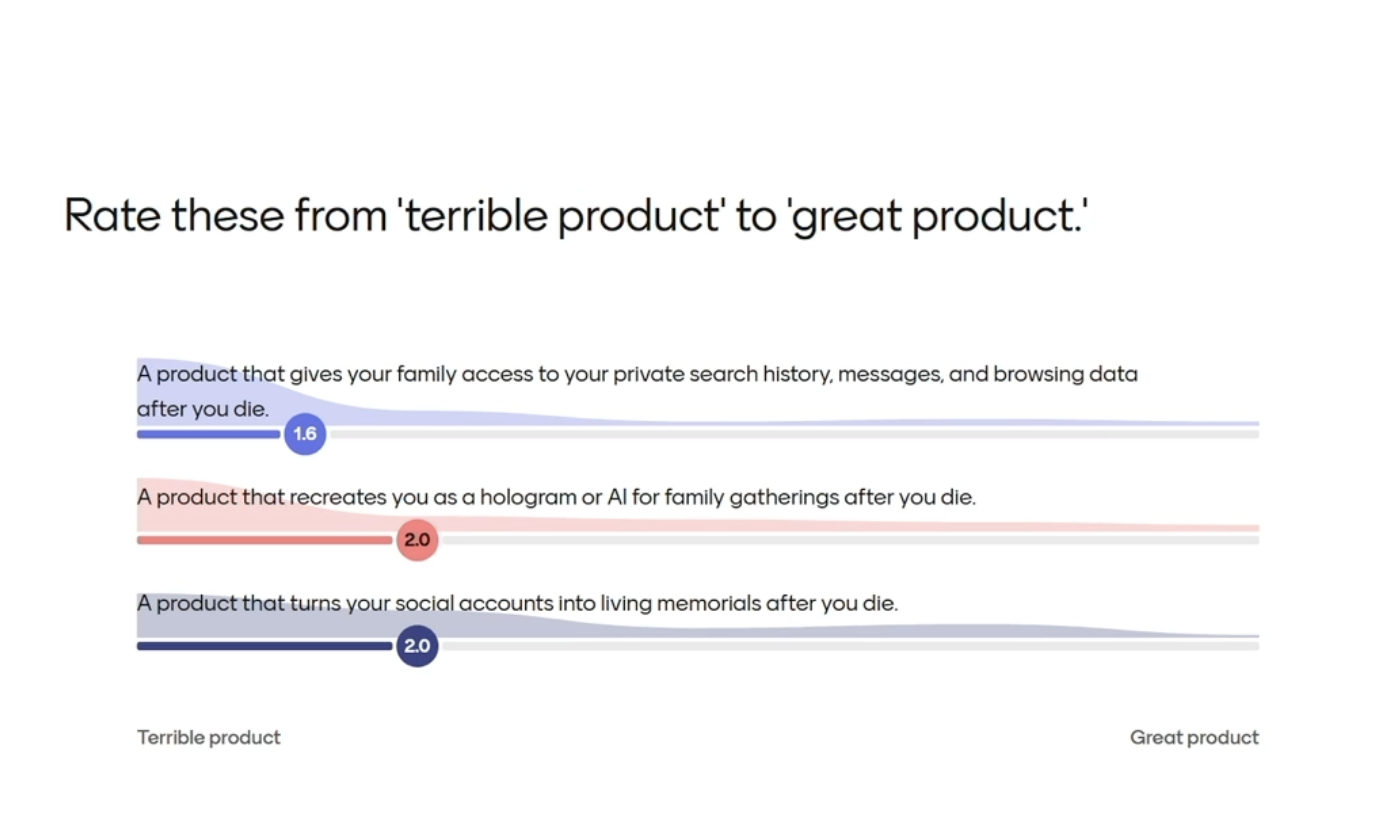
Elaine then presented nine death tech products—covering personal, professional, and existential topics—and asked attendees to rate each one from terrible to great.
Using the Makers Manifesto as a lens for death tech
Next, Elaine referred to the Makers Manifesto—a recently published set of core principles for how to make great products in an AI-driven world. She chose to highlight four:
Understand the problem worth solving
Measure what drives value
Stay close to the people you serve
Consequences matter
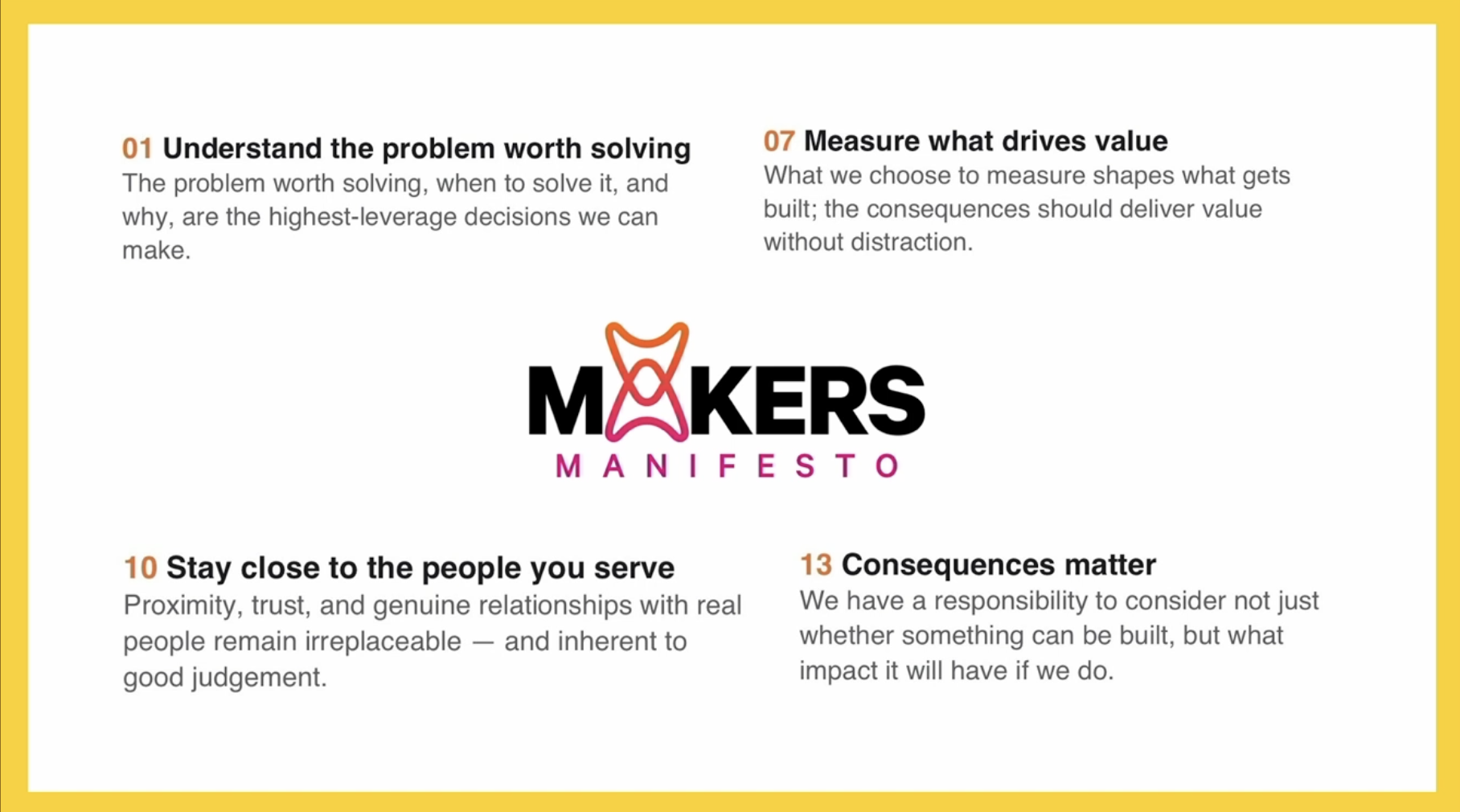
And with this framing, Elaine considered how the principles of the Makers Manifesto apply to the death tech space. What counts as a good product within the digital afterlife industry? When might these products be too much of a good thing?
Understand the problem worth solving
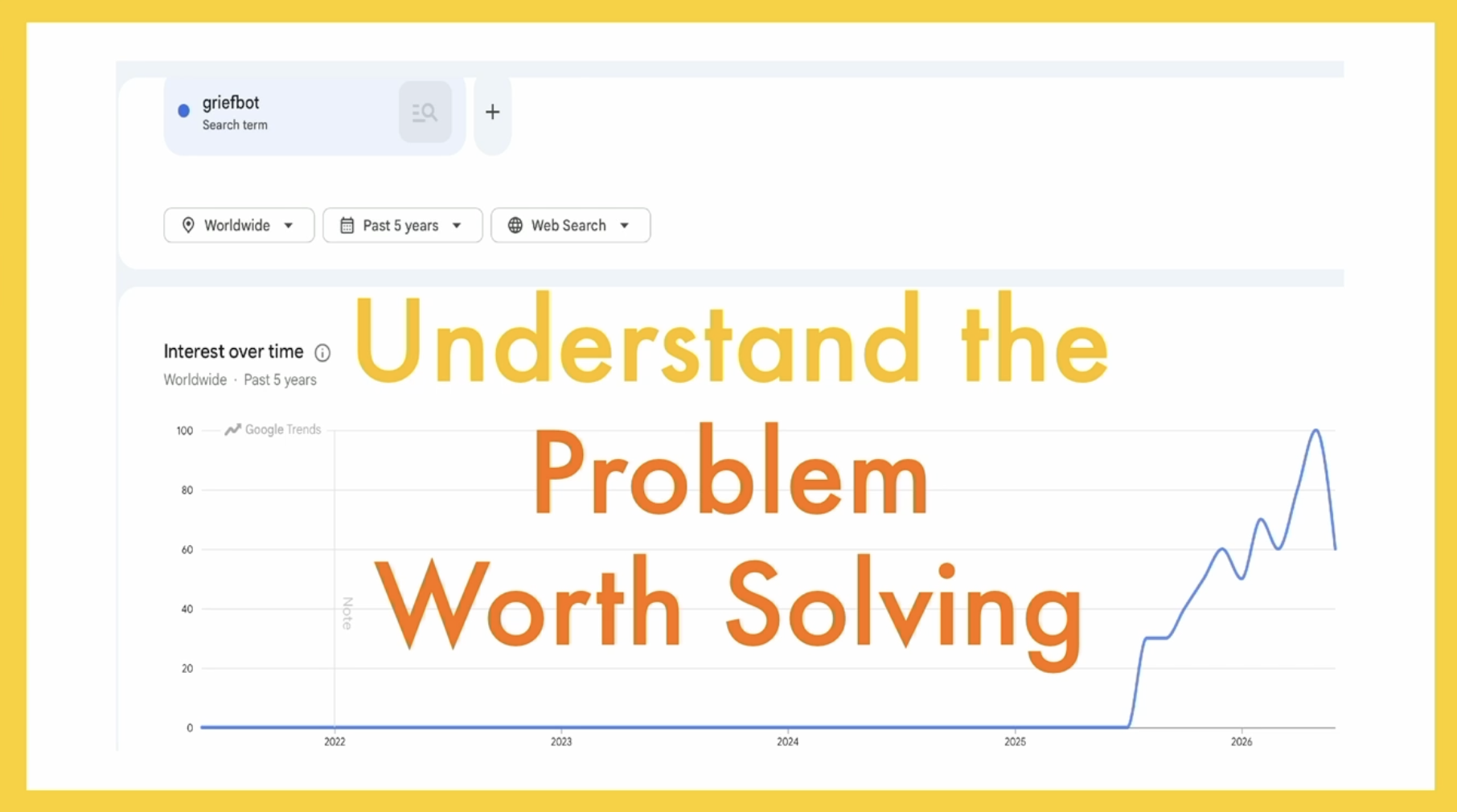
Founders in the death tech space—especially those selling “griefbot” products that allow the bereaved to continue communicating with the deceased—often attempt to solve for emotions that are aversive, difficult, and yet completely normal and healthy. Elaine explained that in psychology, steering around these feelings is called “experiential avoidance” and it makes us psychologically inflexible and emotionally brittle. In other words, we’re only okay when everything is okay.
Is grief really a problem for tech to solve? And which aspects of our humanity are we giving up if we take this approach?
Measure what drives value
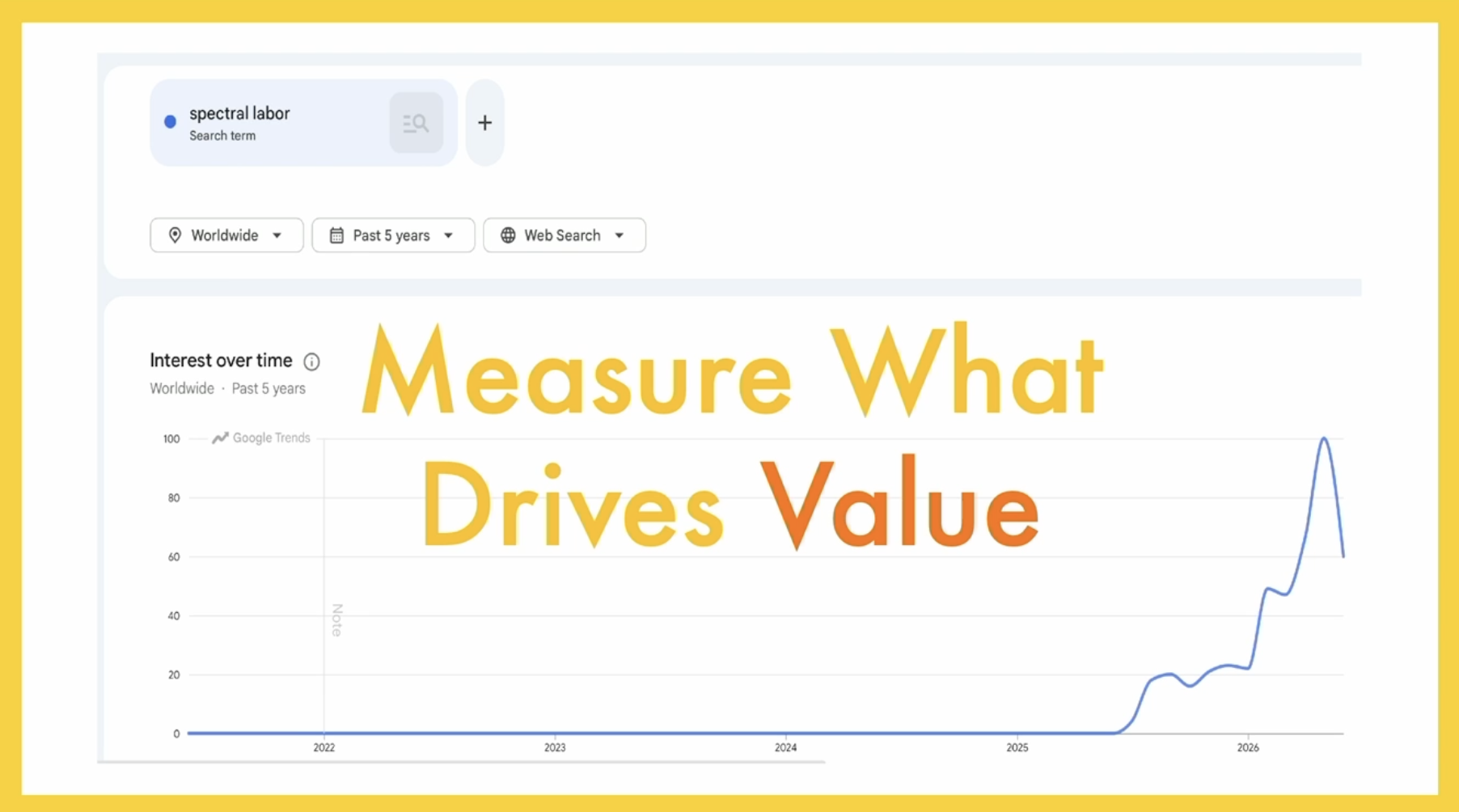
To consider the principle of “measure what drives value,” Elaine introduced the term “spectral labor.” She explained, “In a knowledge economy, the labor of the past is concretized in digital remains—we continue to extract value from the dead in all sorts of ways because their data can be mined like raw ore in land that’s no longer protected.”
One particularly striking example is a professor who delivered a virtual art history module in 2021—even though he had died two years before. And we see all sorts of other applications, from CEOs who create clones to continue managing their companies after their deaths to holographic performances from deceased actors and musicians.
But this spectral labor comes with an expense—it potentially excludes new, more diverse perspectives and can reiterate outmoded ideas and biases. Elaine prompted us to consider:
What value do we lose when we keep on extracting value from the digital dead?
Stay close to the people you serve
One of the central tenets for product people is to design products for the people you serve. But when it comes to the digital afterlife, defining your audience can quickly become a thorny question.
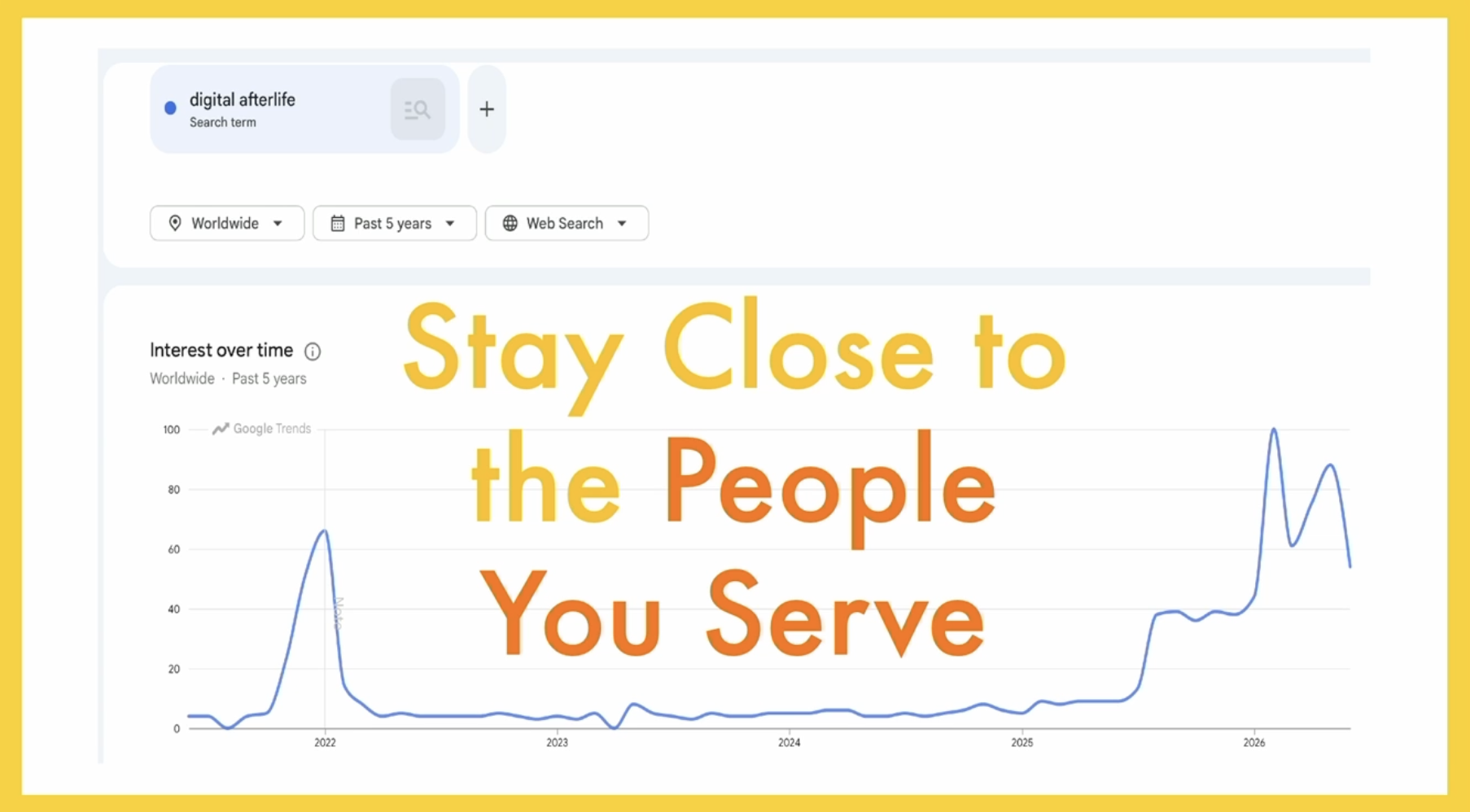
Elaine explained that in the earlier days of the internet, accounts were designed as “delete upon death,” but today platforms like Facebook refer to “the dignity and privacy of the dead,” using this as a reason to keep data, memorialize it by default, and withhold it from family members unless they’ve explicitly been nominated as a legacy contact.
In other cases, companies like Apple have created legacy contact policies where users can nominate contacts to receive everything from their iCloud photos and notes to contacts and calendars. “Not too much practical information that could actually help people settle an estate, but a whole lot of personal information that also pertains to other individuals,” noted Elaine.
And this begs the questions: What does that do to the dignity and privacy of not just the dead but other living users? Who’s being served by a digital afterlife product? Is it the mourners? Which mourners?
Consequences matter
What consequences do products have on the people and world around them, whether intended or not? Because death tech products rely heavily on AI, Elaine highlighted the environmental impact of these products (in addition to the psychological consequences she’d explored earlier).
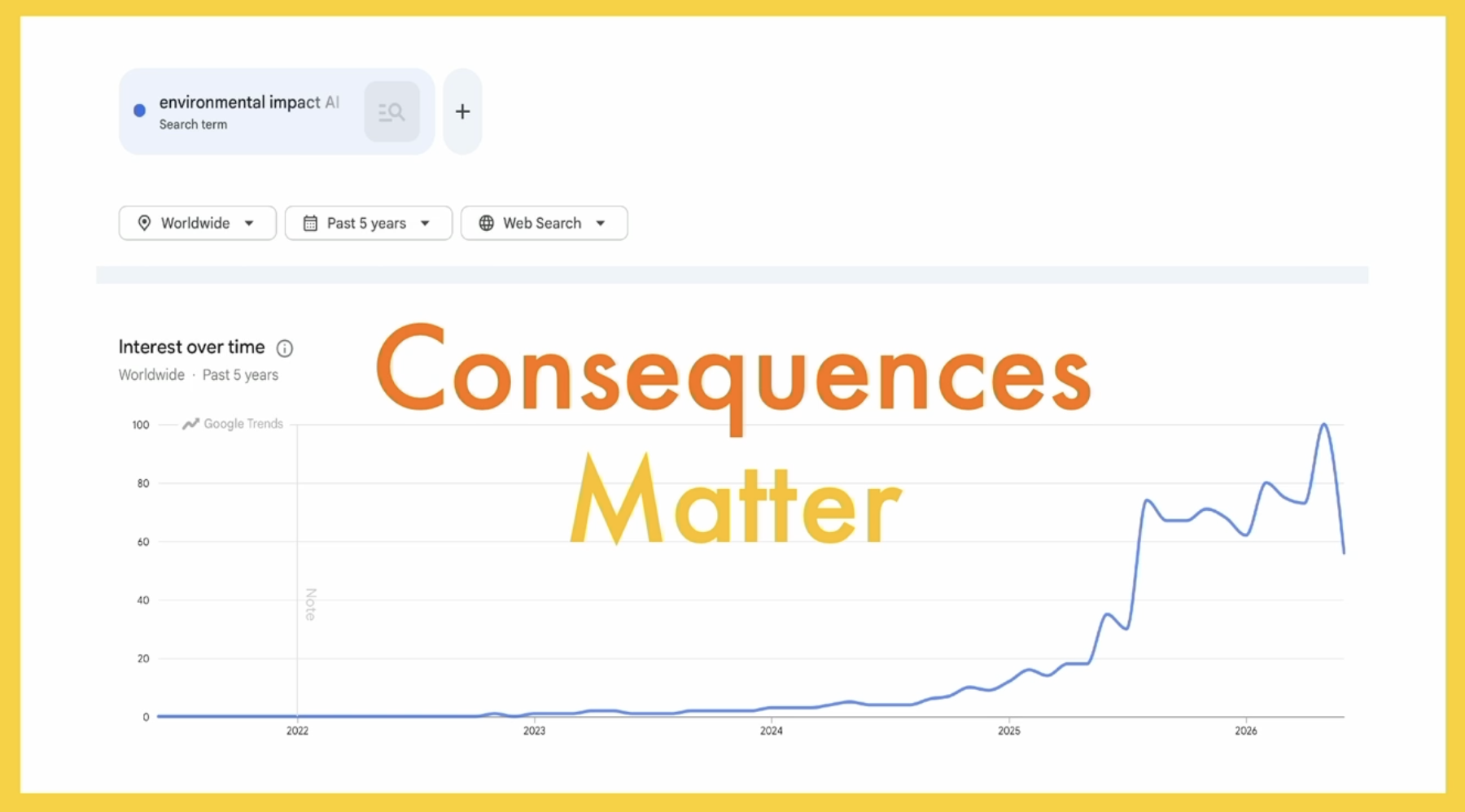
Citing data from the UN that AI data centers will require the same amount of water as 1.3 billion people by 2030, Elaine argued that every use case of AI should be carefully interrogated. She put it plainly: “Every AI replica of a deceased person for no clear purpose that we create and maintain is another claim on the planet’s water resources.”
Questions to continue guiding our product work
To close out her keynote, Elaine invited us to sit with several of the questions she’d raised:
Are normal human experiences like grief and death “problems” to be solved by a product?
What/whose values are served by this product? What/whose values are not?
Who is well served by this product? The powers that be, the machine, the living, the dead?
Is this product worth the water—and other consequences?
And finally, while it may not be legally enforceable yet, Elaine noted that she’s included a “do not bot me” clause in her will. If any of the questions she raised make you feel uneasy about your own digital afterlife, it’s worth taking some time to consider what digital legacy you’d feel comfortable leaving behind.