
Having a PM AI-dentity Crisis
In 2025, Thomas Brouwer found himself mired in what he calls an “AI-dentity” crisis. Maybe you’ve experienced this, too. The symptoms include staring blankly at your computer screen and repeatedly asking yourself big, existential questions about your role as a PM in the face of all this new technology. If AI can build anything in a fraction of the time it once took, what exactly should you be doing?
In his Product at Heart keynote, Thomas explored the theme of conviction. Having a strong belief in the problem you’re tackling, how to solve it, and the strategy for getting there is fundamental to building good products. And if you’ve felt a little shaky about that recently, Thomas outlined a few ways you can build conviction in your work.
Read on for the highlights, or watch the full keynote below.
“Last February I was sitting at my office feeling completely lost,” confessed Thomas. “I’ve been in product for ten years now. I’m good at what I do. And yet I feel like an imposter. Can I still do product in this AI world? I was having an AI-dentity crisis.”
Along with Surbhi Marwah and Pippa Topp, Thomas was one of the Product at Heart speakers who explored the theme of what stays the same in product despite all the changes the industry is currently experiencing.
In Thomas’s case, he landed on one concept: conviction. In this article, we’ll take a closer look at how Thomas defines this term and how you can build conviction for yourself and the rest of your team. But first, let’s start with a little context, shall we? (Even us humans still need that from time to time!)
Where it all began: A push to transform from manual to agentic
Thomas’s story will probably sound familiar to a lot of PMs out there. He was working on a project with kartenmacherei, which allows customers to create products like cards, birth announcements, and photobooks with their own photos. There’s a digital side to the product, where customers select and design whatever they’d like to create, as well as physical facilities where the products get printed and shipped.
Thomas’s team focused on one specific area: making it easier to select photos for a photobook. While customers tend to love designing the product they’re going to order, the process of selecting photos is often tedious and time-consuming because they have to go through thousands of photos to find the best ones.

As Thomas and his team started working on the product, they took out the old playbook. They talked to customers, tested some early prototypes, ideas, and assumptions, and gradually sketched out what the MVP should look like.
But one day, the CEO and CTO came to Thomas’s team and said, “Why are you still doing things manually? We should do everything agentically.”
This was no small ask. It would essentially mean throwing out the old playbook. Interviews, prototypes, assumptions, designs, linear tickets, coding—everything the product team had done themselves would now be AI first. The goal was to release a new version of the app every single day.

“I remember this mixture of excitement and existential angst,” said Thomas. The questions this new reality brought up might be ones you’ve been asking yourself lately:
If I have these agents and workflows doing this work for me, what is my role going to be?
Am I just going to look at the output?
Am I improving the workflows and the agents?
Or am I just out of a job entirely?
Luckily, when he brought this up with his team, Thomas learned that everyone was feeling the same way. And through these conversations, they identified a few core issues with the switch to working agentically.
The 3 main problems with the AI-first way of working
Here’s what Thomas and his team landed on:
1. AI will create quantity regardless of quality
It’s so easy to produce more with AI, but that doesn’t mean that the quality of what gets produced is good enough. (By the way, this was a recurring theme at Product at Heart this year: More and faster is not always better. Christian Idiodi’s keynote is a great example.)
Thomas explained that while the development costs have gone down, the designs are five times faster, and you feel like you can tackle ten problems at the same time, the reality is… not that.
“By doing so many things at once, we often didn’t have a clear, crisp formulation of what the problem was that we were solving and the value proposition that we were delivering. As a result, we did a lot of things, but also the wrong things. We easily got distracted by things that didn’t matter,” said Thomas.
2. The temptation for snacking is always there
Because Thomas’s team consists of strong individual contributors who make a living by being really good at what they do, they often found it hard to change their habits. Thomas compared it to “snacking” when you’re on a diet—it can be so tempting to just do things the old way.
He explained, “Instead of really focusing on building out the AI workflows and making them better, I kept reverting back to, ‘Let me just write this ticket by hand’ or ‘Let me just work around the AI workflow this one time.’”
3. Navigating competing priorities makes it even more challenging
Eventually, Thomas realized that part of the challenge was that his team was navigating two competing priorities at the same time. One the one hand, they needed to deliver a new app experience, and on the other, they had to figure out this new agentic way of working.
This made it much harder to make progress on either front: “In theory they complement each other—if you improve the system, the app development becomes way faster. In practice, if you spend a week improving the system, then no ships and app changes will be made that week.”
The light-bulb moment: Landing on the idea of conviction
With the push to become agentic and the problems that had already surfaced, Thomas took a step back to ask himself what had worked in the past. What does a PM need to do their job effectively?
And after a lot of reflection, Thomas landed on the idea of conviction.
What does conviction mean? It’s a firmly held belief or opinion. “I believe our job is to take the problem, maybe a potential solution, to gather data and information, to form an informed belief or opinion about the problem and the solution, to facilitate the discussion in the company, and then to deliver on it effectively while testing and pivoting as needed,” said Thomas.
And the other side of this revelation is that AI doesn’t change that aspect of our work. “It just exposes it more clearly when we don’t have conviction, because we end up building products that we don’t believe in, and neither do our customers,” Thomas explained.
A closer look at 3 types of conviction
To dig deeper into the concept of conviction, Thomas shared three ways we tend to see it in the product world:
Building conviction
Sharing conviction
Forcing conviction
Let’s take a closer look at each one.
Building conviction is the process of gathering evidence, determining which problems we should focus on, and what the solution should look like. It’s classic discovery, which involves choosing a direction and building confidence around that.
As you’re building conviction, you will likely be asking questions like, “Is this problem worth solving?”, “Is this problem actually solvable?”, “What’s the opportunity cost?”, etc.
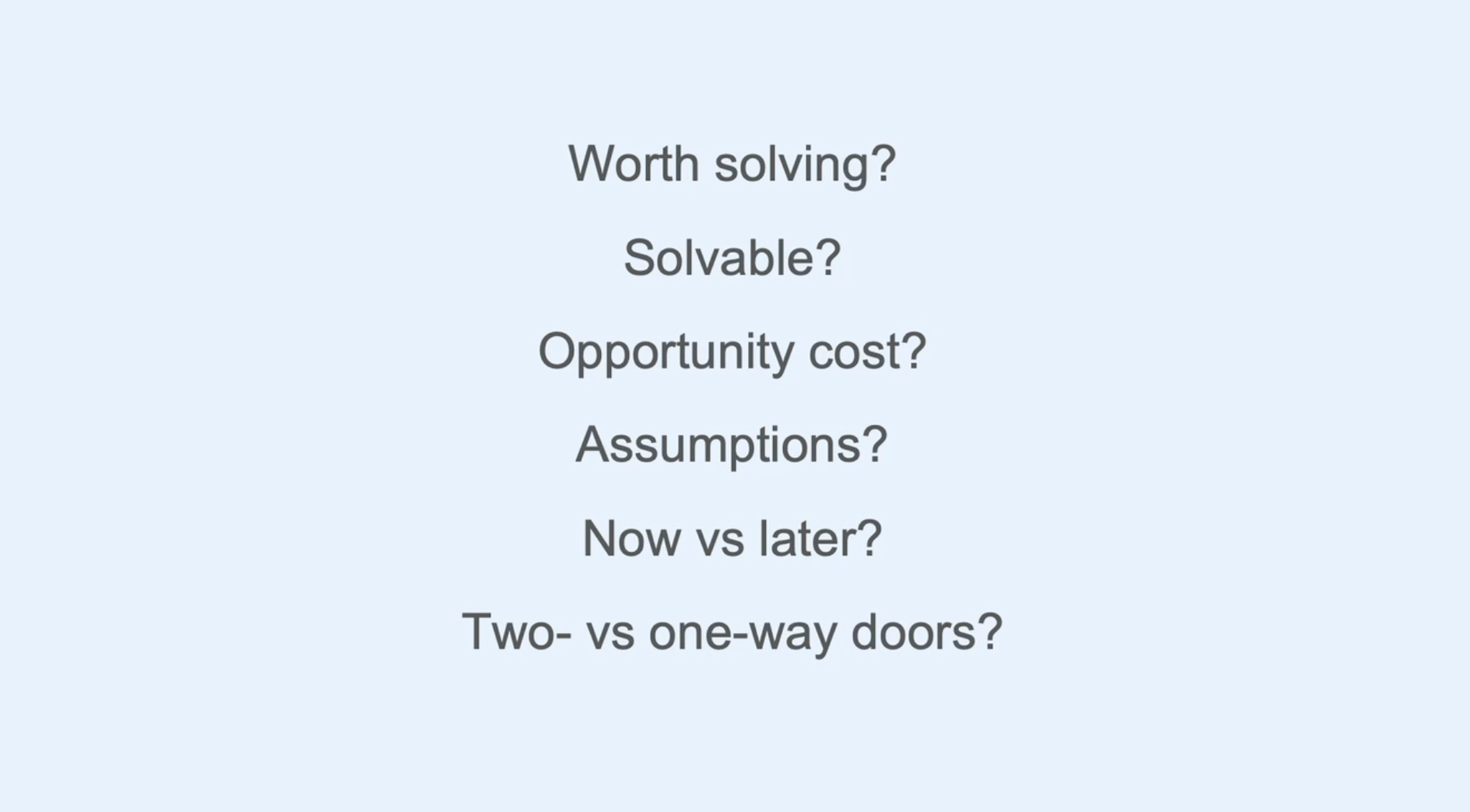
Thomas shared an example for the app he was working on. They needed to determine if users wanted to do the photo selection on a rolling basis at the end of each month, or in one go at the end of the year. This scope decision would fundamentally change the app, so it was critical to get it right. They learned about users’ preferences by talking to them and testing prototypes. Thomas sums it up: “We discovered, we built conviction, and then we made a human decision.”
Sharing conviction involves inspiring your team about your users, their problems, and why what you’re working on will make your users’ lives and your business better. This means regularly sharing the vision and strategy with your team and reminding people why you’re making decisions about what to do or not do. “This is a very human job,” said Thomas. “It’s not just about sharing updates, which AI can actually do very well. It’s about reading the room, understanding what motivates your team and the stakeholders, and sharing the right information accordingly.”
Forcing conviction occurs when there’s no foundation or evidence, just a gut feeling. It’s that idea that comes from a CEO who just won’t let it go, no matter what the evidence, data, and product team says.
As you can imagine, forcing conviction is generally a negative thing. It tends to lead to more stress and less motivation—a dangerous combo.
But at the same time, Thomas explained that there can be a balance between forcing and sharing conviction.
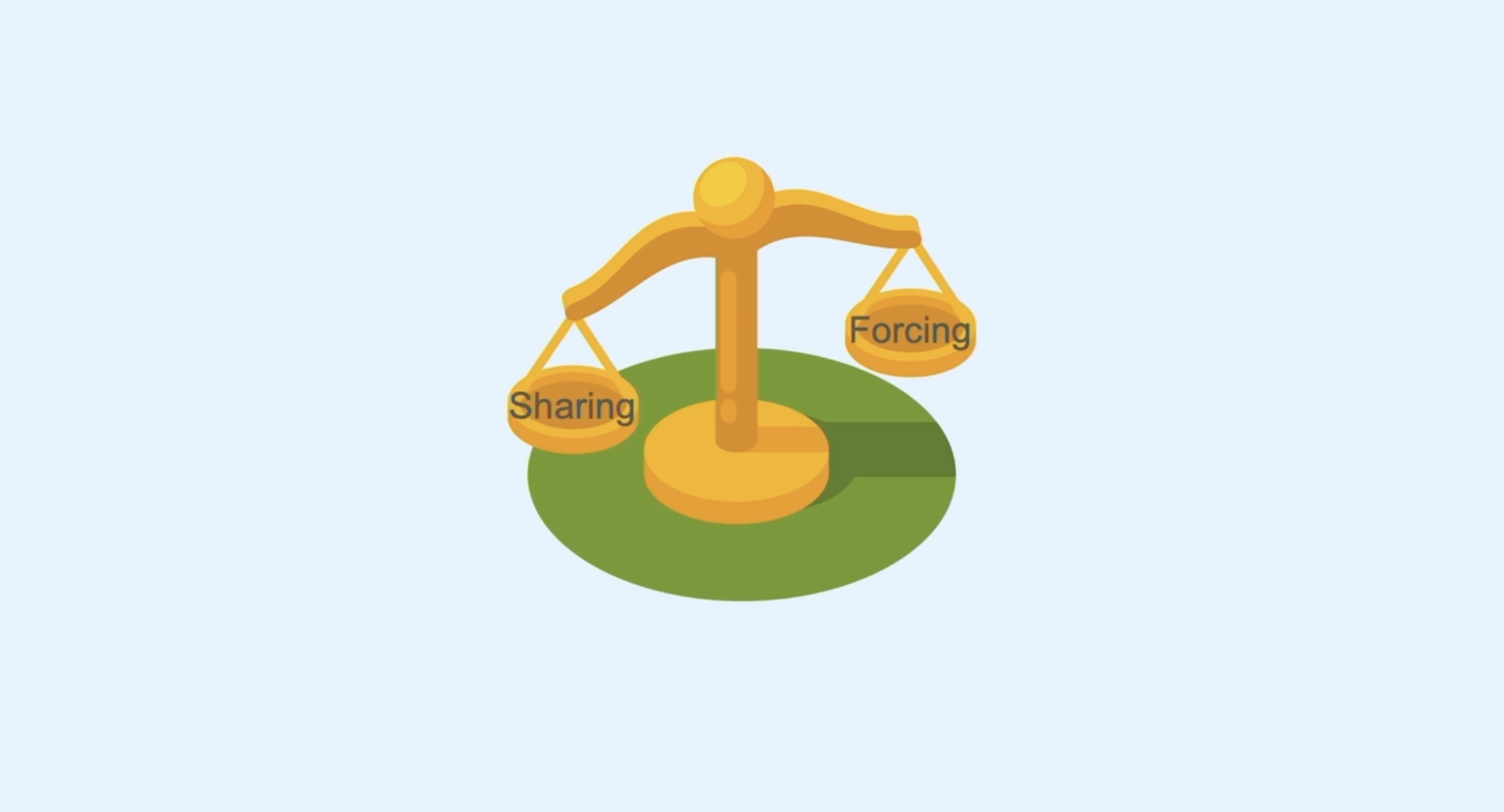
“Sometimes you do need someone who comes in with a strong new idea or opportunity that there may not yet be a lot of evidence for. This can actually push and inspire the team,” said Thomas, citing the example of the agentic way of working. His team did not believe in it from the start, but by being forced into it, they found out where it worked and what the limits were. They needed someone to push them out of their comfort zone or they might never have gotten there.
What conviction looks like in practice
Thomas shared a few of the ways he’s applied conviction to the challenges his team has faced.
Conviction leads to focus
Thomas learned quickly that AI can generate an infinite number of ideas and build an infinite number of things, but that wasn’t actually helping his team. So instead of tackling ten things at the same time, they needed to focus their attention on only one or two problems so they could build conviction more strongly and quickly.
Conviction leads to quality
With a clear understanding of your customers and the specific problems you’re solving for them, it becomes much easier to decide what “good” means. And this allows the team to make decisions about whether AI-first products are good enough. “We as humans need to set the bar of quality and ruthlessly reject things that aren’t good enough,” explained Thomas.
Here’s one specific example of how Thomas’s team started to approach this: If the output from the agentic workflow was ever unsatisfactory, instead of fixing the output, the team would revisit the workflow. They’d identify what went wrong in the workflow and fix it, just like you might do in a retro with your team. They built a retrospective skill in Claude to facilitate that process, so now whenever they don’t like the output, they trigger the skill, identify what went wrong, and look for things that can be improved in the future.

One other step that’s made a huge impact? Adding more checkpoints early in the process so human members of the product team can identify potential mistakes before they snowball.
Conviction lets you spend your time on the right tasks
Thomas mentioned earlier that it sometimes felt like his team wasn’t working on the right things. Using the analogy of the ships vs. the shipyard, he explained that the product team’s old job was focused on building ships, AKA following the old playbook for building products.
Now with agentic workflows, they were also responsible for building the shipyard, and spending too much time in either area would prevent them from making progress.
“We felt confused and guilty because we couldn’t spend time on either of those areas without feeling unproductive,” Thomas explained.
Luckily, the solution was simple enough: They created a guideline to spend 50% of their time on developing the app and 50% on improving the setup.
Returning to the idea of the AI-dentity crisis, Thomas still sees the need for humans to be involved in the product development process. AI lacks context, tries to tackle too many things at once, and forgets past decisions too easily.
And, as Thomas highlighted throughout his talk, humans are the ones who bring conviction to this work—we have the ability to see how our work fits in with our company’s larger objectives, we question underlying motivations and assumptions, and gather evidence from observing and talking with customers to make sure we’re solving the right problem the right way. These are the things that remain the same, no matter what AI is capable of.