
Executive Presentations. Why Good Work Doesn’t Sell Itself.
Despite the 39-degree heat melting my brain, Product at Heart enabled me to start absorbing knowledge before the conference itself.
The evening before, I met the other speakers and experienced product leaders over a relaxed dinner beside one of Hamburg’s many canals. As an American who has only recently moved to Europe, the connections I made that evening were especially meaningful.
I genuinely believe that remaining curious and continuing to learn keeps you good at your job. I learned a great deal during that pre-conference dinner. Then I learned even more from the keynotes, the other speakers, and the Hard Problem Clubs.
At the start of the conference the next day, I heard keynotes from Teresa Torres and Christian Idiodi, who approached the uncertainty surrounding AI from two complementary perspectives.
Christian and I had worked together previously - he helped train our product managers at Mailchimp, so I already knew what a compelling teacher and storyteller he could be. In The Era of the Product Creator, he argued that product management has drifted away from creation and toward coordination—roadmaps, backlogs, ceremonies, and the administration of work. AI may make building faster and less expensive, but it also makes it possible to build the wrong thing faster. His challenge was for product people to return to the discipline's real work: understanding customers, developing business judgment, and creating solutions that deliver meaningful value.
Teresa’s keynote, I Can’t Predict the Future (and Neither Can You), approached the same uncertainty from a deeply personal perspective. She described her own journey from AI novice to someone building AI products for real customers—not by pretending to know where all of this is going, but by becoming willing to be a beginner again. Her talk was a reminder that curiosity is not passive. It requires us to step into discomfort, experiment in small ways, and trust that we are capable of learning what comes next. I totally vibed with this keynote as I have moved from AI novice to using 3 types of AI daily and building with Codex and Loveable.
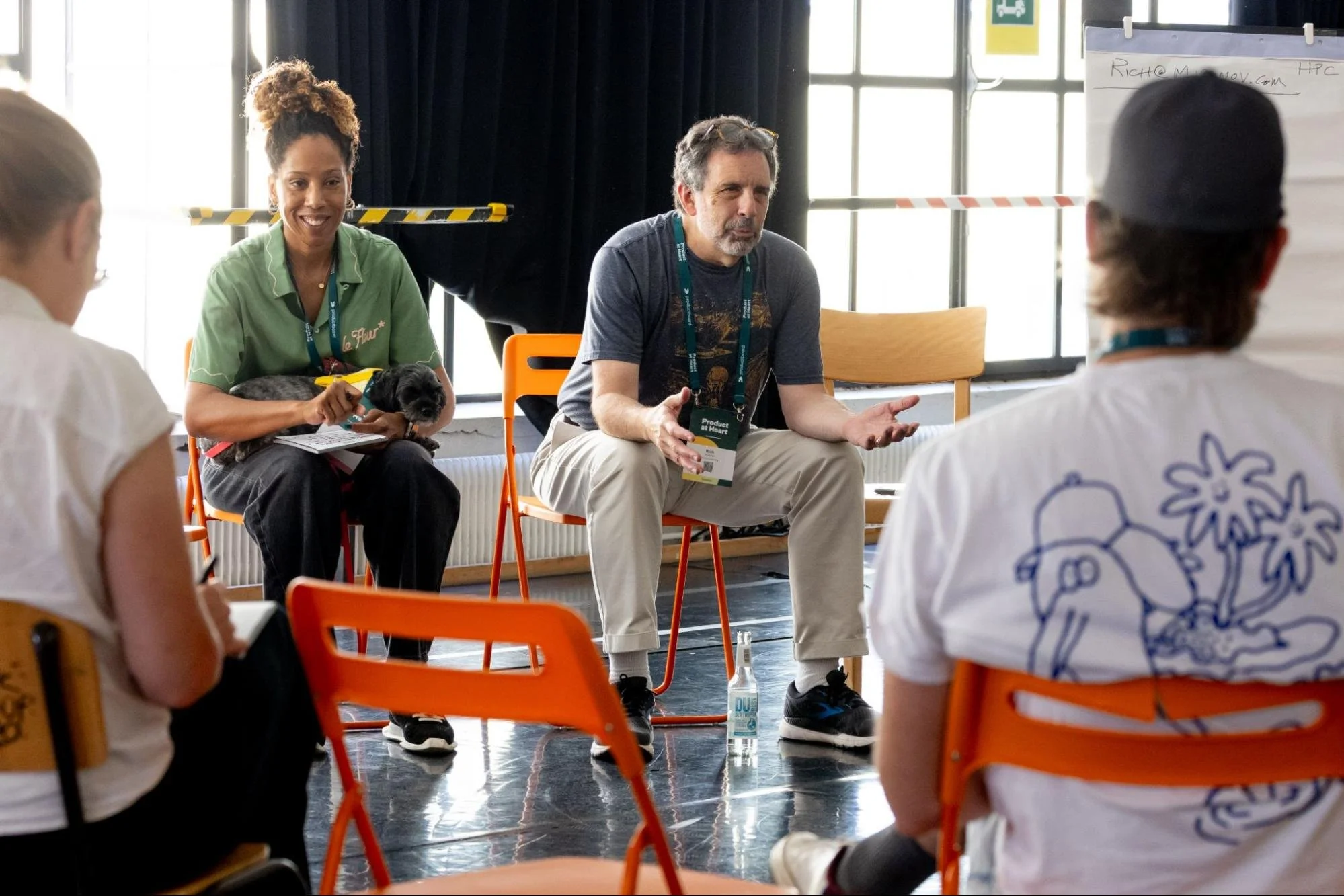
I attended Rich Mironov’s session, Founder-Led Organizations: When Founders Are De Facto Product Leaders. I have worked with several founders—and several different iterations of founder-led companies—but Rich offered a framing that helped us understand both sides of that relationship.
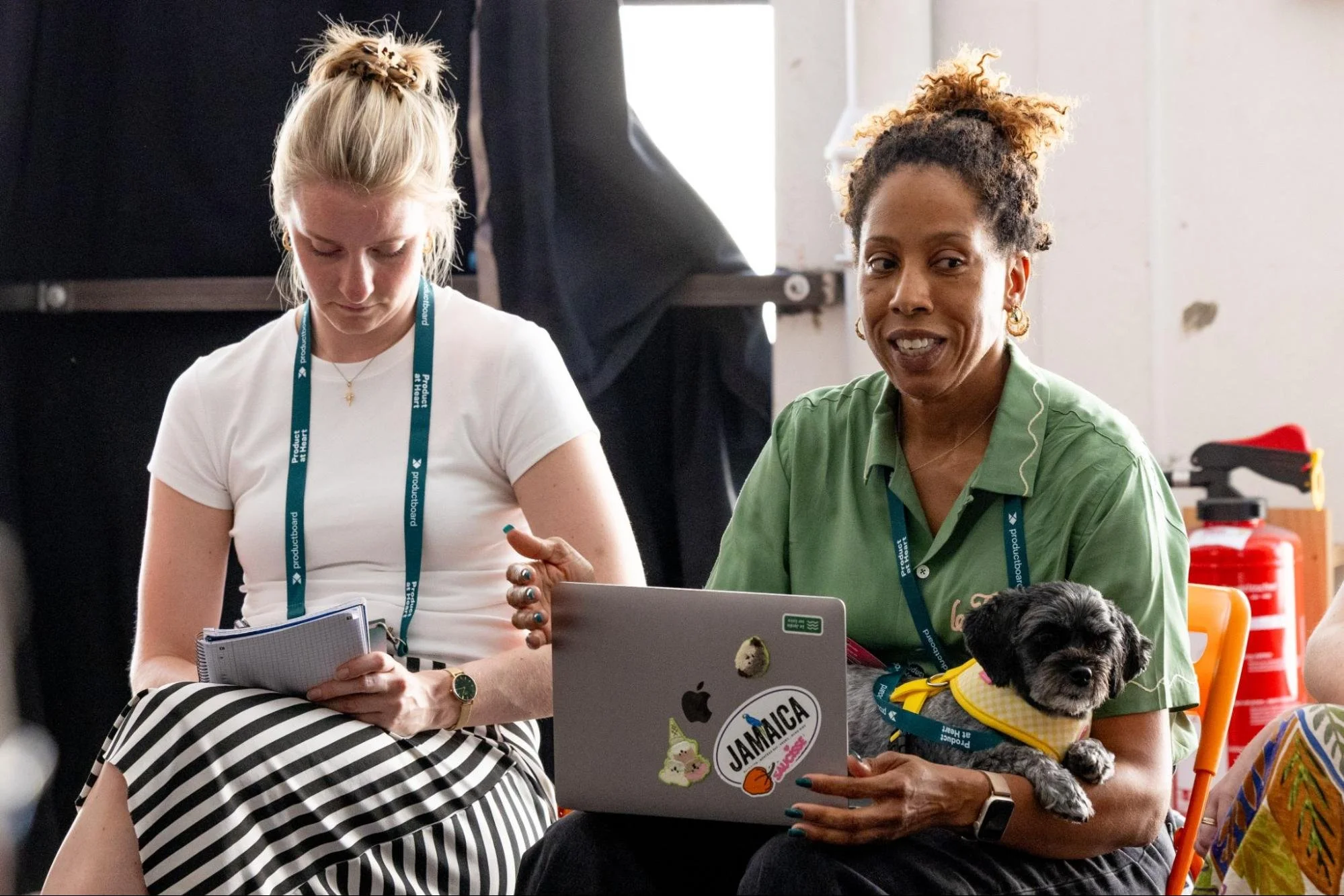
He made clear why honest dialogue with a founder is essential. But he also helped us see the relationship from the founder’s perspective: the enormous and constant pressure they are under to make the company and its product successful.
Even after more than 20 years in product, I learned a great deal in that hour. I am grateful to Rich for allowing me to join the conversation.
I learned just as much from the people who attended my own Hard Problem Club.
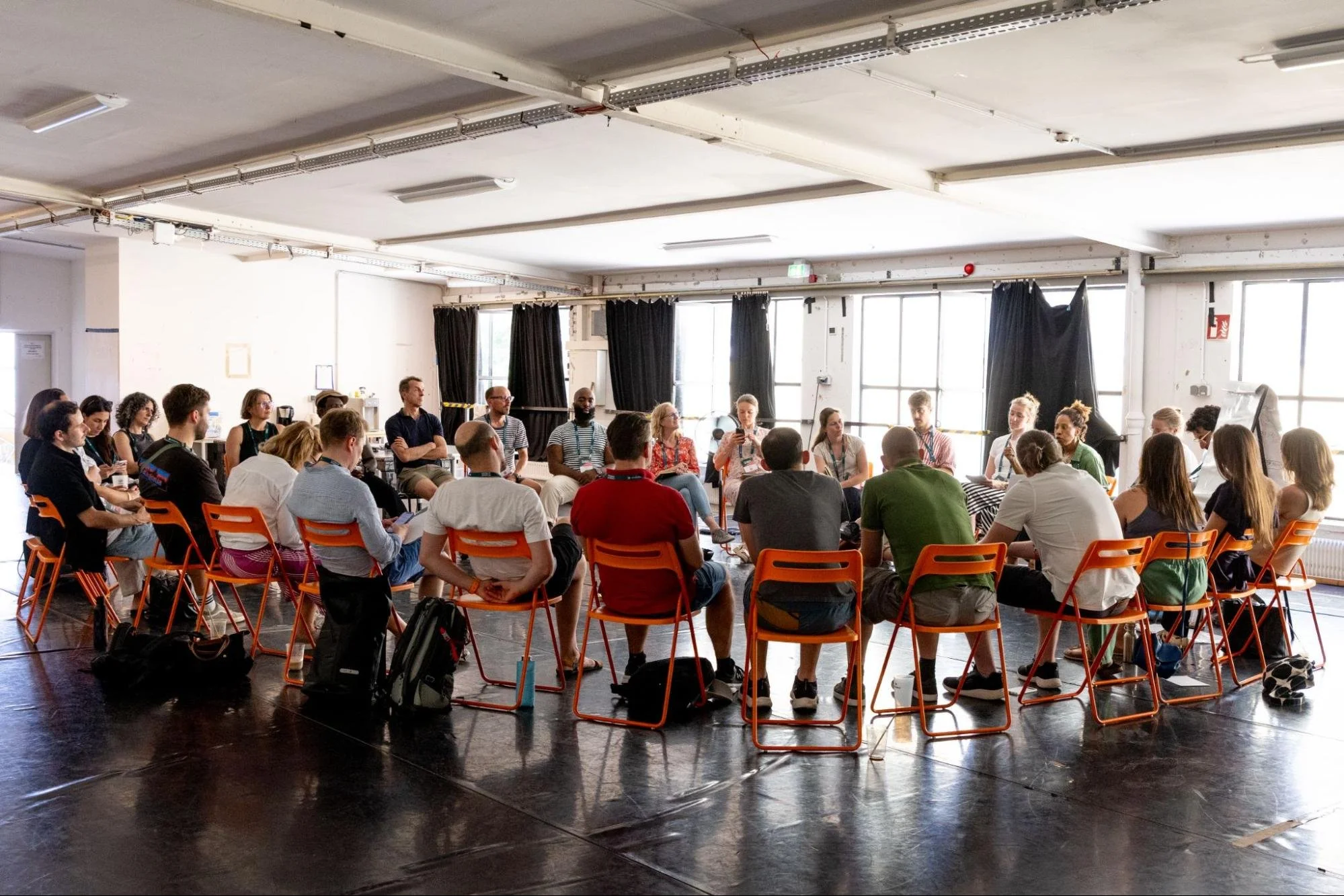
Many product people are struggling with the same questions I struggled with earlier in my career:
How do I have a meaningful conversation with an executive team—one that holds their attention while still communicating what I am trying to accomplish across multiple horizons of a roadmap?
How do I navigate the different personalities in the room?
How do I bring my engineering and design leads into the conversation as genuine partners?
How do I make sure I am asking the right questions of analytics?
How do I use data to strengthen the story rather than overloading everyone with numbers?
The people in the room also challenged me. I liked that. I don't mind being challenged because, as a product manager, you have to be prepared to have your thinking challenged. As you rise up the ranks, the challenging become more intense. That is part of what makes product such a difficult job. It is also what makes the work valuable.
There is a great deal of conversation right now about product managers needing to become “builders.” I understand the argument. But I believe product management ultimately sits at the intersection of customer problems and experiences, team execution, and product economics.
Those things will continue to matter whether AI drives more of the building process or not.
One of the more personal highlights of the conference was signing books with Matt LeMay. Matt is the author of Agile for Everybody, Product Management in Practice, and Impact-First Product Teams. I had the privilege of writing the foreword to the second edition of Product Management in Practice, and Matt very generously included me in his signing session at Product at Heart.
But what I keep returning to from the entire experience is the importance of human connection.
Yes, AI is going to change our jobs. I believe it will accelerate the need for product managers to become genuinely outcome-focused. As the mechanics of building become faster, cheaper, and more accessible, simply producing software will no longer be the differentiator.
Understanding which outcomes matter—and why—will be.
Those outcomes begin with customer problems. Ultimately, products exist to solve a problem for a person. AI may change how we build, but it does not remove the need to understand that person.
Product at Heart asked what kind of environment product managers need in order to do that work well.
How do we remain focused on customers, both in the problems we choose and the outcomes we pursue? How do we motivate our teams, develop our skills, and have candid conversations with one another in a psychologically safe space?
Sometimes, product people simply need to hear:
I’m not the only one, and I’m not crazy.
They need to meet people working in different industries and countries and realize that, despite the differences in our organizations, many of us are wrestling with the same hard problems.
The range of those conversations mattered. Kai Stevens brought hardware product people together to discuss what happens when the usual discovery playbook does not apply. Mathieu Ritter created space for an honest conversation about the difficult journey from wanting your next product role to actually getting it. The Hard Problem Clubs recognized that product management does not have one universal context—or one tidy set of answers.
It was also good to see Productboard supporting the event. I have used the product in the past, and it was encouraging to see companies from within the product ecosystem investing in the community around the work.
So, once again: thank you, Petra. Thank you, Arne.
Thank you for creating an environment that was psychologically safe and experientially diverse—across industries, countries, software, and hardware. Thank you for creating space for product people not merely to be spoken to, but to speak honestly with one another.
I hope Product at Heart will have Nina and me back in 2027.
In the meantime, let’s keep talking about how we enlighten, uplift, challenge, and support one another as product managers.
Let’s not go back to the old way.