
Less Handoffs. More Hands-on.
Typical product workflows involve several layers of handoffs: PMs write the specs, designers create the mockups, and data analysts check in once the product is built to see if it worked as intended. There are clearly defined boundaries and reluctance to do something that isn’t “your job.”
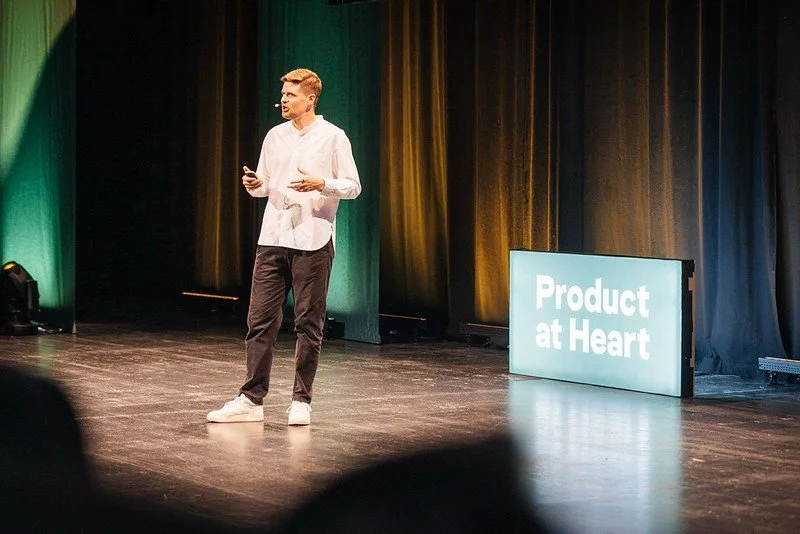
But not anymore. AI is completely changing the game when it comes to workflows and responsibilities. Jan Werner, Lead Product Manager at Instaffo, was one of the Product at Heart speakers addressing the question of what’s changing in the world of product, along with Simonetta Batteiger and Hayder Schneider. Jan’s talk emphasized how AI is breaking the traditional model of clearly defined roles.
Catch the highlights from Jan’s talk below or watch the full keynote to learn how the product org at Instaffo has embraced a new way of working that involves less handoffs and more hands-on engagement.
How many ideas for your product have you had in the past week? Chances are, it’s a pretty substantial number. And how many of those ideas have made it through customer interviews, validation, and prototyping? Probably a much smaller number than the first.
“Most ideas die in transit,” explained Jan. “And that’s no surprise because the way we are working is built on handoffs.”
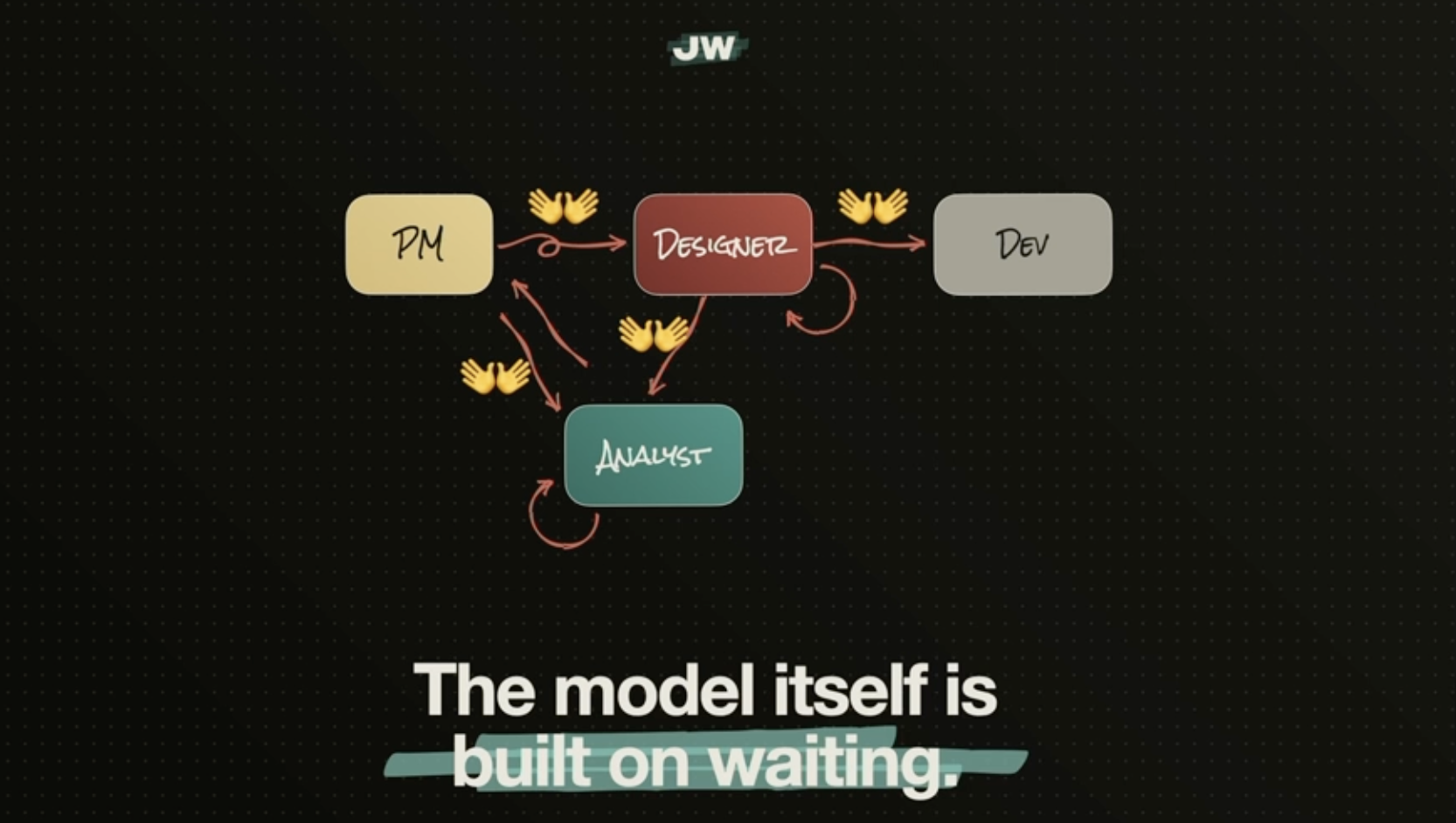
This was certainly the case within the product org at Instaffo: Each person who was involved in the product development process had to hand their work over to another person. Each handoff involved time spent preparing and time spent waiting. And many promising ideas got lost along the way.
But that’s all changed with AI. Jan described how AI has allowed every member of the product org to be much more hands-on in their work.
A brief introduction to Instaffo
Instaffo is a recruiting marketplace that’s set up as a typical two-sided market. Companies can post jobs on the platform and talent can find jobs that fit their skills and requirements.
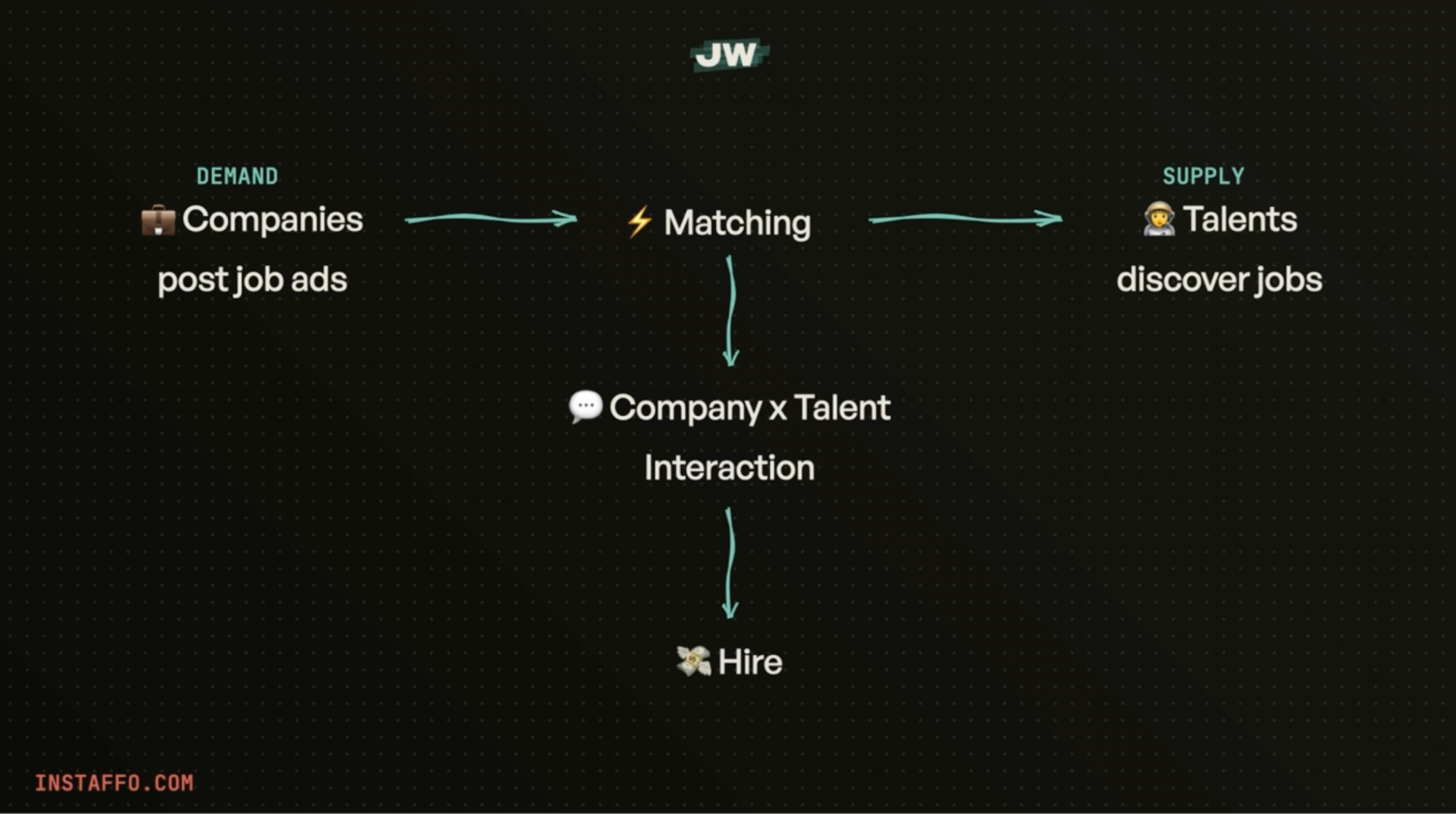
Ideally, companies will find the type of talent they’re looking for and talent will be matched with jobs that they’re interested in.
As you might imagine, recruiters often post open jobs on Instaffo on behalf of their companies. And this was a task Jan was looking to learn more about. But it wasn’t as easy as it might sound.
Change #1: Working with data
During a user interview, Jan observed that when a recruiter was creating a job, they didn’t use the fancy AI job creation tool the product team had worked so hard on. Instead, the recruiter simply duplicated an old job.
This sparked Jan’s curiosity: How many other recruiters were doing the same thing?
But with no tracking implemented, there was no way for Jan to answer that question.
In the past, getting tracking set up would have involved writing a ticket, waiting for it to be added to the next engineering sprint, waiting for the engineering team to actually build the feature, etc. It could’ve taken weeks for Jan to answer his original question.
But access to Claude Code has changed the game. Instead of going through the old-school workflow, Jan wrote a ticket and labeled it with “AI schedule.” Claude Code picked it up, wrote the code, and created a test environment where Jan could try it out. After giving feedback to Claude Code and going through a few rounds, Jan was able to submit a pull request.
“This opened up a new world for me,” said Jan. He realized that he could essentially skip the queue of waiting for the data team and get his answers in a fraction of the time.
Change #2: Building prototypes
Jan shared another example of a job creation “wizard” that didn’t feel as magical as its name might suggest. The product team wanted to make it much easier to use, but it felt like it would be too labor-intensive to write out specs and follow a typical workflow. “I wanted to put the vision into the head of the product trio,” explained Jan.
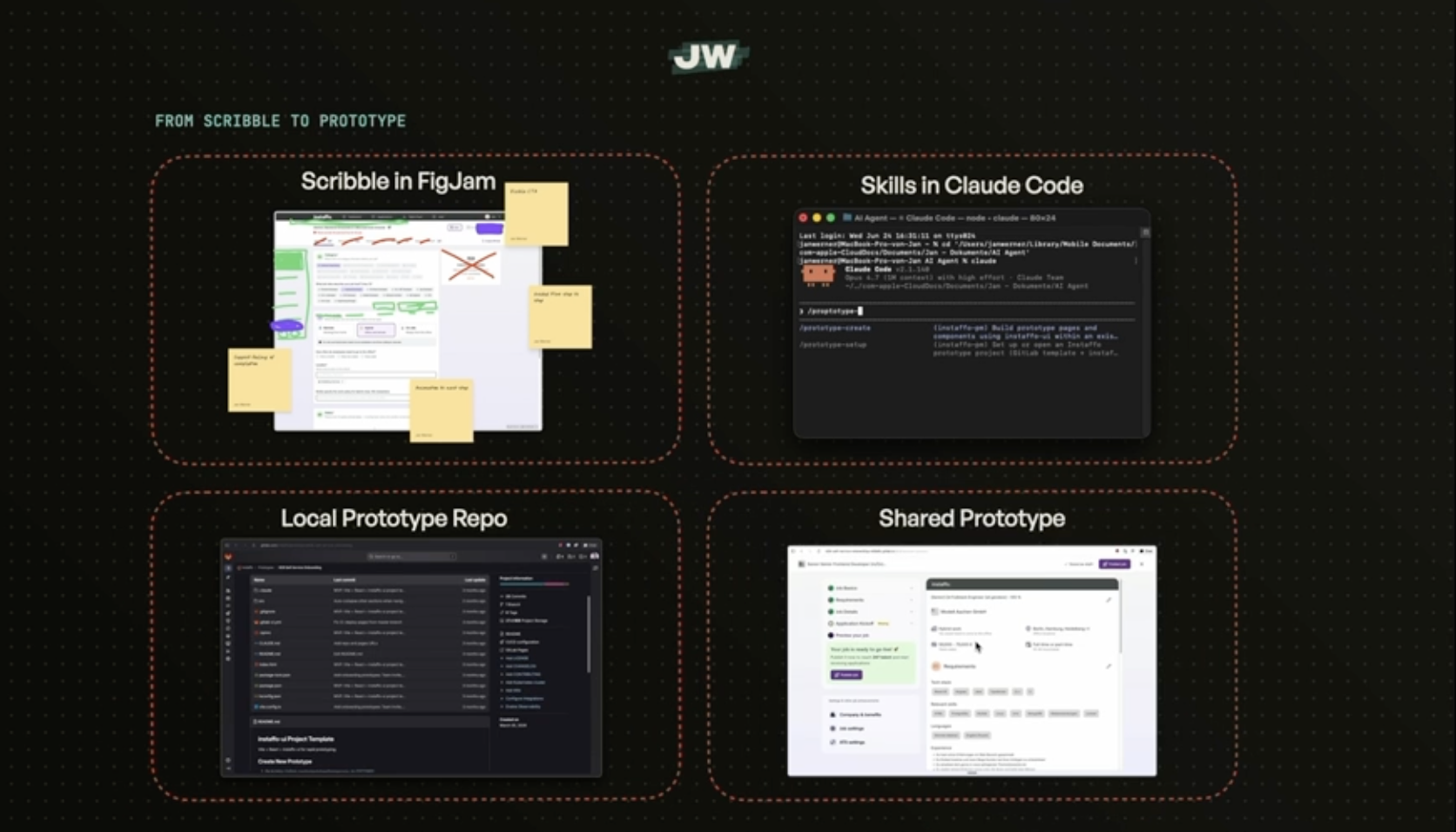
To help everyone get on the same page, the product team decided to do a one-day experiment. Here’s how they approached it:
They started in the morning with FigJam to scribble ideas and create a shared vision.
They went into Claude Code, which has a skill for building prototypes. It’s been trained on Instaffo’s design system and Jan used voice to text to simply describe what he wanted.
Claude Code added the prototype to the prototype repo.
They now had a shared, clickable prototype to work with and get feedback on. And it ended up being not that different from what the product looks like today!
Change #3: Building a system to keep the chaos in check
At this stage, you might be thinking, “If everyone is now coding and has access to repos, that’s just going to lead to chaos.” And you’d be right, says Jan. “This doesn’t work unless you build your system around it.”
At Instaffo, having repos and shared projects encourages everyone to contribute. If someone finds they’re blocked, like Jan was with tracking job creation within the app, they can just take their idea and run with it—to an extent.
But they also maintain a shared repo, which they refer to as their “product operating system.” Everyone in the product org has a local copy on their computer, and once they change something, it gets pushed to the shared folder.
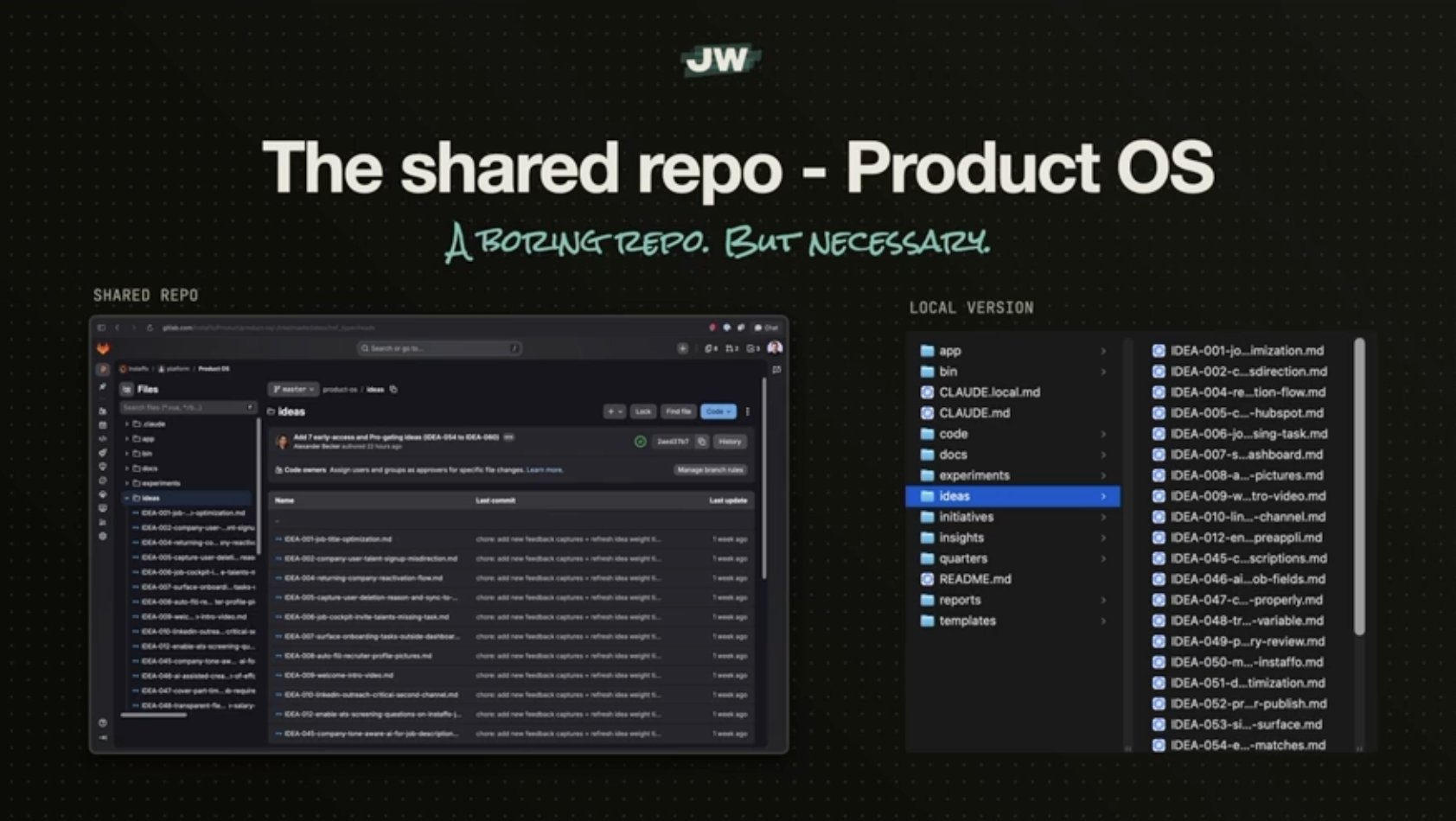
This product OS repo contains raw ideas and initiatives, and product team members can either access it through Claude Code or through a simple interface that runs locally on their computer. This is a living document, so anyone who has a question or idea can quickly get the context, see what already exists, and learn who’s involved.
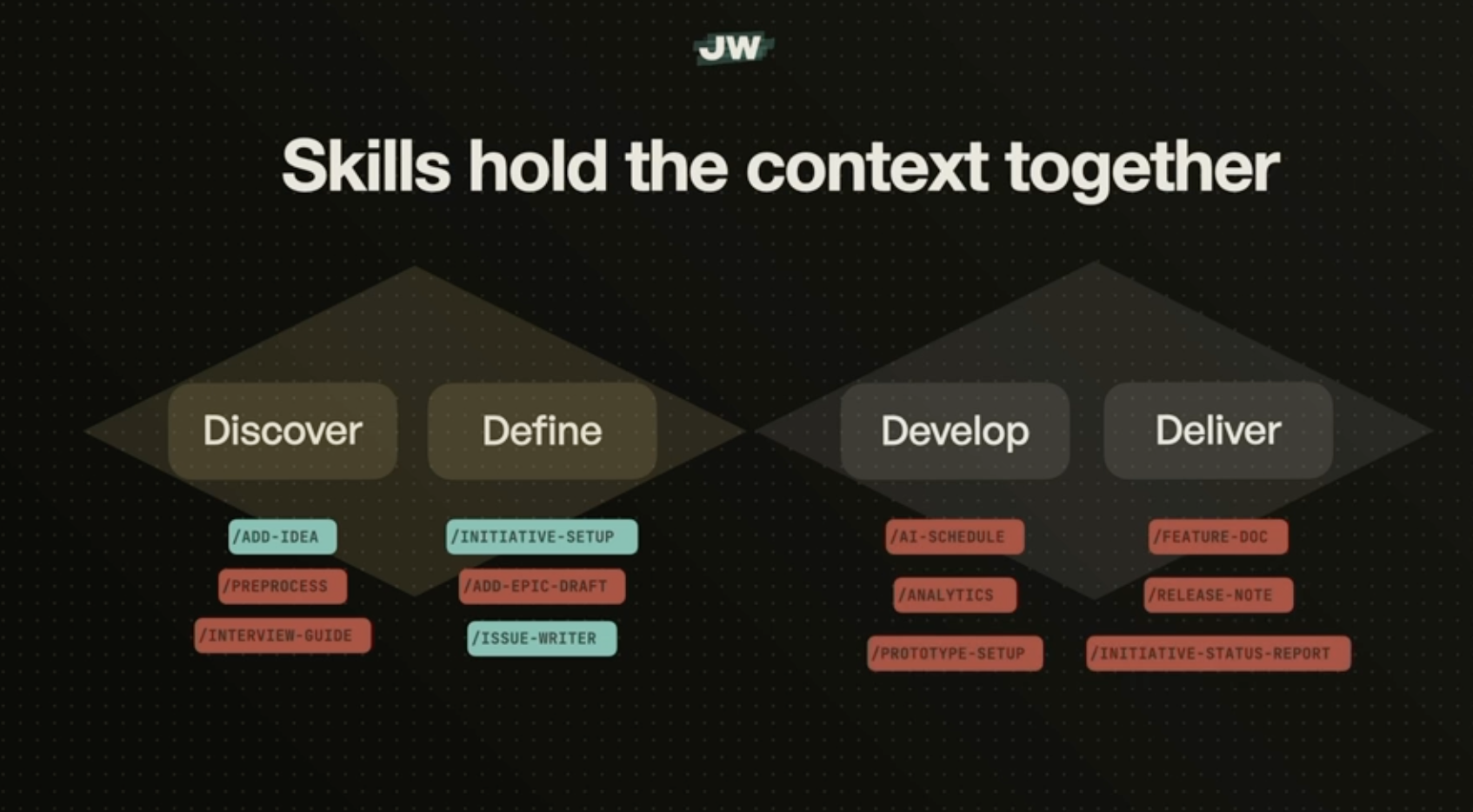
The slide below shows an overview of the stage of product development (e.g. “discover”) and the skills Claude Code has been equipped with (e.g. “add idea”).
A truly empowered product org
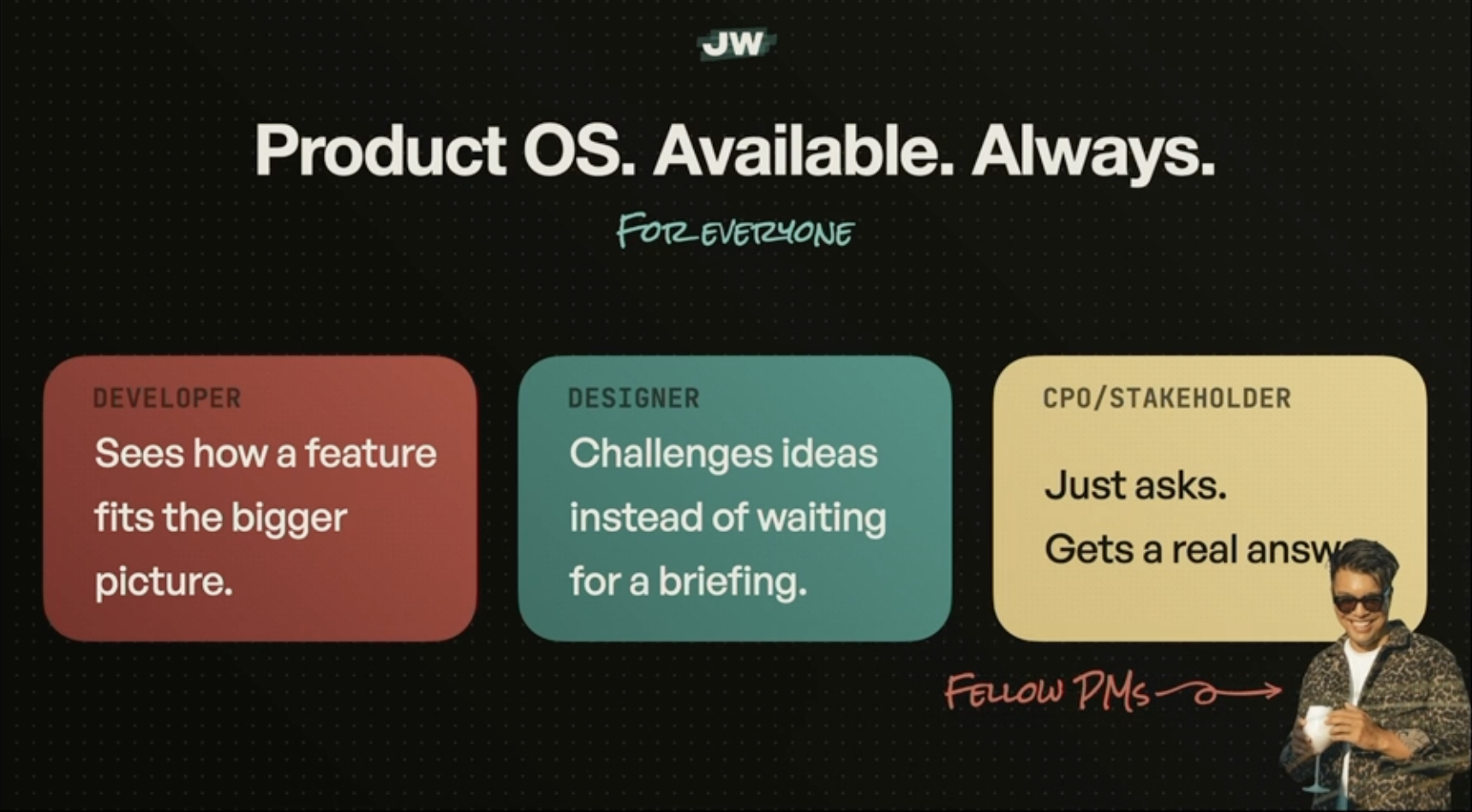
Reflecting on how the product org at Instaffo now operates, Jan is truly impressed by how hands-on everyone can be. Since the product OS is available to everyone at all times, it means a designer can challenge ideas instead of waiting for a brief. It means the developers can see how an idea fits into the bigger picture. And it enables stakeholders to get the specific answers they’re seeking instead of tapping others to get this information.
Jan’s story illustrates just how much the day-to-day work of a PM has changed. It’s no longer quite so easy to define what’s your job vs. what isn’t. You no longer have to play the waiting game to collect data or build prototypes. Yes, it takes trusting yourself and working in an environment that trusts you, but it is absolutely possible to create a product org that focuses less on handoffs and more on being hands-on.